


A predictable, repeatable process that turns strangers into qualified prospects—that’s the whole point of a lead generation system. It all comes down to defining your ideal customer, picking the right channels to find them, and setting clear goals so you know what's working. This strategic foundation is what separates sporadic lead collection from a real, scalable engine for business growth.
Laying the Groundwork for High-Quality Leads
Before a single lead even hits your inbox, the best systems are built on a solid foundation. This is where you ditch the guesswork and get strategic. Without a clear direction, you're just wasting time and money attracting people who will never become customers. A powerful lead gen system isn't just a collection of tools; it's a framework that starts with two simple questions: Who are we talking to, and what do we want to achieve?
This initial phase is all about mapping the path from identifying your ideal customer to setting concrete, measurable goals.
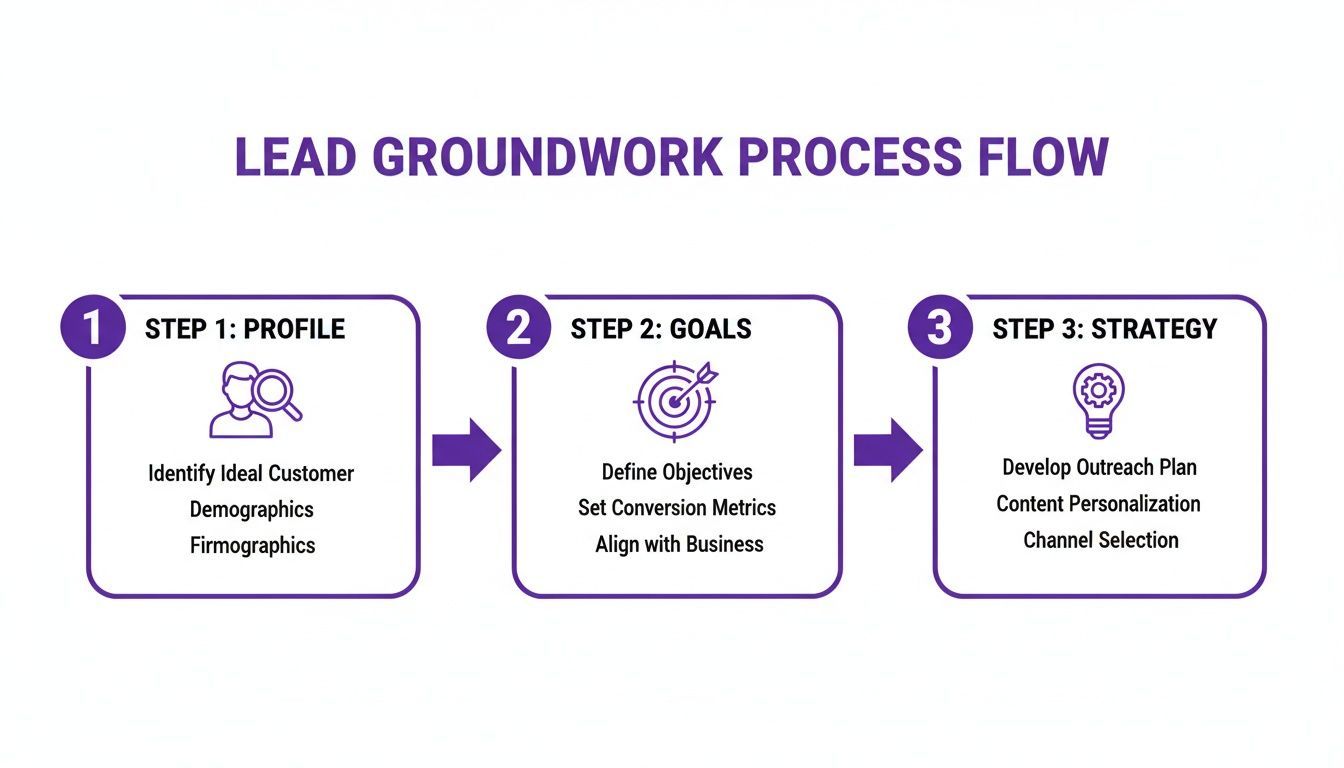
As you can see, a strong lead generation strategy always starts with the who before you can set any meaningful goals for the what.
Define Your Ideal Customer Profile
First things first: you need to get crystal clear on who you're trying to reach. Before you even think about building the system, it's absolutely crucial to lay the groundwork by defining your Ideal Customer Profile (ICP). An ICP isn't just some vague persona; it's a detailed blueprint of your perfect customer, backed by real-world data from your best clients.
To build a useful ICP, you need to answer some specific questions about them:
- Firmographics: What's their job title? What industry do they work in? How big is their company, and what’s its annual revenue?
- Pain Points: What problems are keeping them up at night? What specific challenges are they facing that your product or service is built to solve?
- Goals: What does success actually look like for them? What are they trying to accomplish for their business or in their career?
- Watering Holes: Where do they hang out online? Are they all over LinkedIn, lurking in niche industry forums, or active in specific subreddits?
This level of detail guides every single decision you make from here on out. For example, knowing your ICP spends a ton of time in certain LinkedIn groups tells you exactly where to focus your outreach. Building a detailed ICP is the first step toward creating a high-quality prospect database that fuels your entire sales motion.
Set Goals That Actually Matter
Once you know who you’re targeting, you need to define what winning looks like. So many teams fall into the trap of chasing "vanity metrics" like website traffic or social media likes—numbers that feel good but don't actually translate to revenue. A robust lead generation system is built on goals that are tied directly to business outcomes.
The objective isn't to generate the most leads; it's to generate the most qualified leads at an acceptable cost. This shift in focus is what separates a busy marketing team from a profitable one.
Instead of chasing generic targets, focus on setting clear, measurable objectives that prove a real return on investment (ROI).
Effective goals for your system should look something like this:
- Marketing Qualified Leads (MQLs) per Month: A hard number of leads that fit your ICP and have shown some initial interest.
- Cost Per Qualified Lead (CPQL): How much you're spending to acquire one MQL. This tells you how efficient each channel really is.
- Lead-to-Customer Conversion Rate: The percentage of qualified leads that end up becoming paying customers.
- Sales Cycle Length: The average time it takes for a lead to move through your funnel and sign on the dotted line.
Setting these goals gives you a benchmark for performance. It lets you see what’s working, spot bottlenecks, and make smart, data-driven decisions to optimize the whole system. This is how you turn lead generation from a cost center into a predictable revenue driver for the business.
Finding and Activating Your Best Lead Channels
Okay, you’ve done the hard work and now have a crystal-clear Ideal Customer Profile (ICP). So, where do you go from here? The next move is simple: find these people where they already hang out.
A winning lead generation system doesn't try to drag prospects into unfamiliar territory. That’s a losing battle. Instead, it meets them in their natural habitats. This means you need to think beyond a single channel and start building a cohesive strategy across multiple platforms that work together.
The real key is figuring out which channels give you the best bang for your buck. Some companies crush it with organic search, while others find their goldmine on professional networks like LinkedIn. The goal is to build a multi-channel presence where each platform amplifies the others, delivering a consistent and powerful message.
Identifying High-Potential Channels
Think of your ICP research as a treasure map. The "watering holes" you uncovered—the blogs they read, the social networks they frequent, the industry forums they trust—are your primary targets. Don't spread yourself thin trying to be everywhere at once. That's a classic rookie mistake. Instead, prioritize channels based on where your ideal customers are most active and, just as importantly, receptive to your message.
Start by bucketing your options into a few main categories:
- Inbound Channels: These are designed to pull customers in with valuable content. Think SEO-optimized blog posts, helpful YouTube tutorials, or insightful research reports that solve a real problem for your ICP.
- Outbound Channels: This is where you proactively go to them. We're talking about targeted email campaigns, direct outreach on LinkedIn, or even good old-fashioned cold calling (when done right).
- Paid Channels: This is your pay-to-play option. Things like Google Ads, LinkedIn Ads, or sponsoring content in industry publications fall into this bucket.
The global lead generation industry is on track to hit $295 billion by 2027, and a lot of that growth is powered by tools that automate this process. Yet, even with all that tech, marketers are struggling. A whopping 61% say generating high-quality leads is their biggest challenge. This just goes to show how critical it is to pick the right channels from the get-go. You can dig into more of these industry trends and statistics on Martal.ca.
Crafting Your Channel-Specific Strategy
Once you've picked a few high-priority channels, you need a unique game plan for each. The way you talk to someone on a professional platform like LinkedIn is completely different from how you'd engage in a casual subreddit. A solid strategy means adapting your approach to fit the context of each channel.
Let's Walk Through a Content Marketing and SEO Strategy
Imagine your ICP is a marketing manager at a B2B SaaS company. Your research shows they're Googling things like "how to reduce customer churn" or "best B2B content strategies." Here’s how you can build a strategy around that:
- Create Pillar Content: Get to work on comprehensive, long-form blog posts that are the definitive answer to those questions.
- Optimize for Search: Use solid on-page SEO practices to make sure your content climbs the search rankings for those exact keywords.
- Promote Everywhere: Don't just publish and pray. Share snippets and links to your articles on LinkedIn, in relevant newsletters, and in industry forums to drive real traffic.
This inbound approach builds your authority over time and brings in qualified organic traffic without you having to chase every single lead.
A common mistake is treating all channels like they're the same. An effective multi-channel strategy isn't about blasting the same message everywhere; it's about starting relevant conversations in different places.
Now, Let's Talk Social Media and Direct Outreach
For a lot of B2B sales pros and recruiters, professional networks are the most direct path to qualified leads. This is where precision and personalization really matter. A well-executed social media strategy can be a powerful engine for your whole system. If you want to go deeper on this, check out our detailed guide on social media lead generation.
This approach gives you a direct line to your ideal prospects, turning their passive social scrolling into active sales opportunities. By combining broad inbound tactics with targeted outbound efforts, you build a resilient, scalable system that consistently fills your pipeline with high-quality leads.
Modernizing Your Lead Capture and Enrichment Process
Getting eyeballs on your brand is one thing, but actually capturing prospect information is what keeps your pipeline full. Every successful lead generation machine needs a seamless way to move people from "interested" to "in my database." If that connection breaks, even the best marketing in the world goes to waste.
The Traditional Way: Manual Data Entry & Custom Coding
For years, this was a mind-numbing, manual grind. Think endless hours spent copying and pasting names, titles, and company details from websites into a clunky spreadsheet. Not only is that slow and inefficient for any sales professional or recruiter, but it's also a recipe for human error. One simple typo and a hot lead goes cold.
The more technical folks might have tried writing their own scraping scripts. While that's certainly faster than copy-pasting, it demands serious coding skills and constant upkeep as websites inevitably change their structure. It’s a resource-heavy approach that’s just not practical for most sales and marketing pros who need to move quickly.
The Modern Way: One-Click Data Extraction
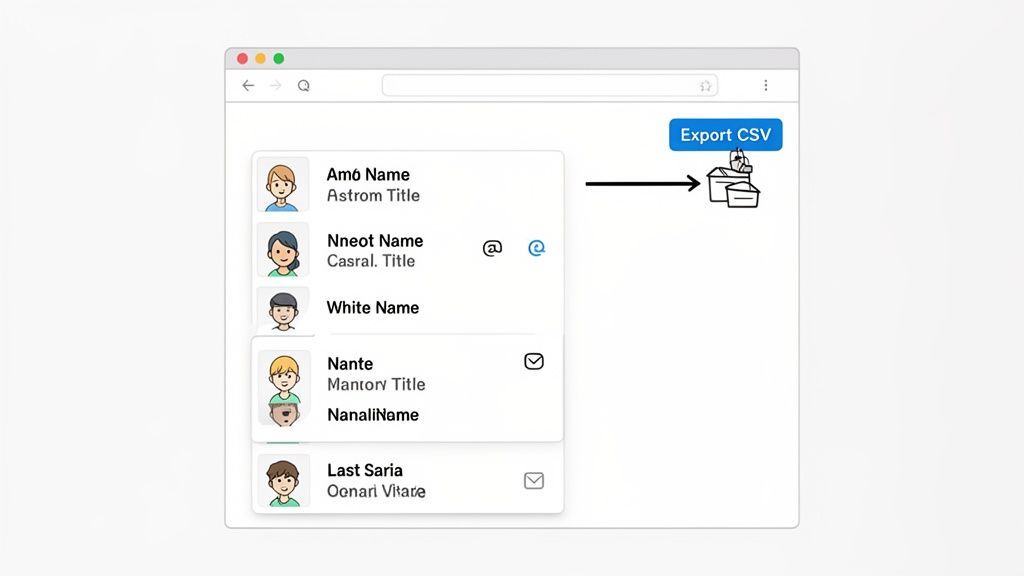
Thankfully, we've moved past those dark ages. Today, building a lead list has gone from a manual chore to an automated, one-click workflow—a non-negotiable part of any modern lead gen system. Tools like ProfileSpider are designed for this exact purpose. As a no-code browser extension, it turns hours of tedious work into a simple click.
Imagine you’ve found the perfect company and landed on their team page, or maybe you've uncovered a niche professional directory packed with your ideal customers. Instead of mentally preparing for hours of data entry, ProfileSpider intelligently analyzes the page, identifies all the individual profiles, and pulls out structured data like names, job titles, and company info instantly.
The real win here isn't just about speed. It’s about empowering non-technical users—salespeople, marketers, and recruiters—to build high-quality prospect lists at scale. This puts powerful data collection into the hands of the entire team, turning anyone into a list-building pro.
A Practical Example: Before and After ProfileSpider
Let's look at a real-world scenario. A recruiter has been tasked with finding 50 software engineers in a specific city for a high-priority role.
Before ProfileSpider (The Grind):
- The recruiter heads to a professional networking site or a tech conference's speaker page.
- They fire up a blank spreadsheet.
- One... by... one, they copy and paste the name, title, company, and location for every relevant profile they find.
- This eats up an entire afternoon, is incredibly boring, and is just begging for copy-paste errors.
After ProfileSpider (One-Click Workflow):
- The recruiter lands on the exact same page.
- They click the ProfileSpider extension and hit "Extract Profiles."
- The AI gets to work, instantly populating a clean list with every engineer's name, title, and company.
- The recruiter can then drop these new contacts into a dedicated list, like "Software Engineer Candidates Q3," right inside the extension.
What used to be a soul-crushing task is now done in less than a minute. The system can handle bulk extractions of up to 200 profiles at once, effectively turning any webpage into an instant, actionable database. The takeaway is clear: ProfileSpider doesn't just offer a slight improvement; it fundamentally changes the economics of list building for busy professionals.
From Simple Capture to Powerful Enrichment
Grabbing basic contact info is really just the first step. To build a truly formidable lead generation system, you need enriched data—the kind that fuels genuine personalization. Enrichment is all about adding layers of valuable context to that initial contact record. This could mean adding:
- Verified business email addresses
- Direct-dial phone numbers
- Links to other social profiles
- Company size and industry data
This is the information that lets you graduate from generic, templated outreach to hyper-personalized campaigns that actually get a response. Many teams are constantly looking for ways to get a fuller picture of their prospects, and it's worth exploring the best data enrichment tools to see what aligns with your process.
Automated tools can take a simple list of names and companies and append all this crucial data, saving you from hundreds of hours of manual research. A well-oiled system also thinks about capturing leads around the clock. For instance, exploring methods for building a chatbot for lead generation that converts can help you capture and qualify leads directly on your website 24/7.
When you combine automated capture with smart enrichment, you create a system that doesn't just save time—it massively improves the quality and accuracy of your data. This sets the stage for far more effective nurturing and outreach down the line.
Turning Cold Contacts into Sales-Ready Leads
A list of contacts, no matter how well-sourced, is just raw material. The real magic happens next—turning that raw data into a predictable pipeline of sales-ready opportunities. This is where you build an engine that systematically qualifies, nurtures, and converts initial interest into genuine sales conversations.
If your process stops at just capturing a lead, you're leaving the most valuable part of the journey completely up to chance. You need a structured way to sort the window shoppers from the people who are ready to talk business.
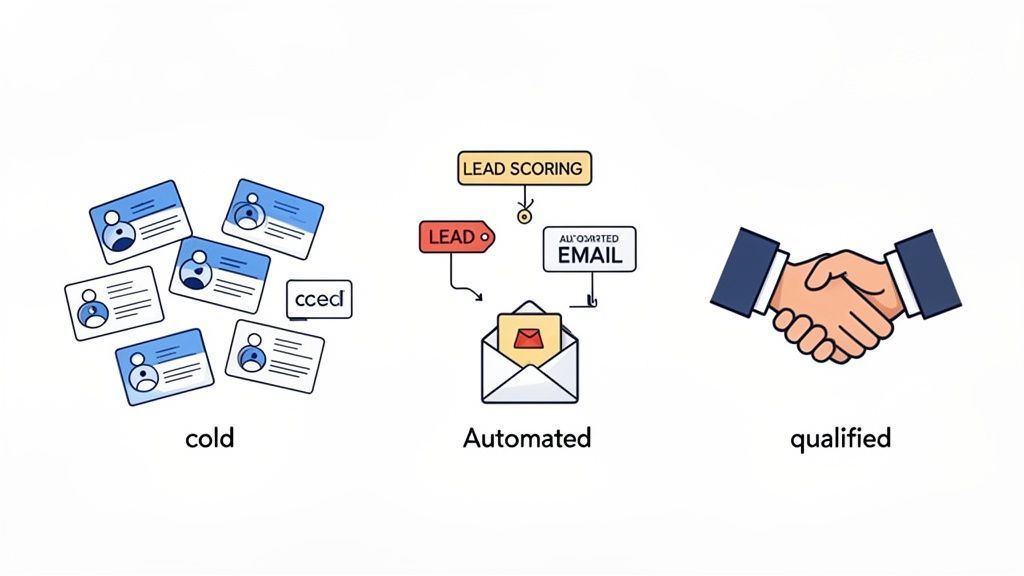
This shift from a simple list to a qualified pipeline is built on two core pillars: lead scoring and lead nurturing.
A Simple Framework for Lead Scoring
Let's be honest: not all leads are created equal. Lead scoring is just a practical method for ranking your prospects so your sales team can focus on the hottest opportunities first. The idea is to assign points based on a lead's attributes (how good a fit they are) and their actions (how engaged they are).
Fit Scoring (Demographics/Firmographics): This is all about how closely a prospect matches your Ideal Customer Profile (ICP). You assign points for specific traits. For instance, a "Director of Sales" might get +10 points, while a "Sales Intern" gets +1. A company in your target industry gets +15, while one outside of it gets +0. Simple.
Engagement Scoring (Behavioral): This score reflects how interested a prospect is, based on their interactions with you. Opening an email might be worth +2 points, clicking a link +5, and visiting your pricing page a whopping +20.
Add these two scores together, and you get a clear, data-backed hierarchy of your leads. Anyone scoring above a certain threshold—say, 50 points—is automatically flagged as a Marketing Qualified Lead (MQL). That's the signal to your sales team that this person is ready for a conversation.
The goal of lead scoring isn't to create some ridiculously complex algorithm. It's to build a simple, shared definition of "sales-ready" that gets your marketing and sales teams on the same page, ensuring no high-potential lead gets left behind.
Building Your Lead Nurturing Engine
So, lead scoring tells you who to talk to right now. But what about everyone else? That's where lead nurturing comes in. It’s the process of building relationships with prospects who aren't ready to buy just yet by delivering valuable, relevant content over time.
This focus on nurturing is the true backbone of any solid lead generation system. The numbers don't lie. A staggering 80% of new leads never actually result in a sale. But the companies that absolutely crush it at nurturing generate 50% more sales-qualified leads at a 33% lower cost. Even better, those nurtured leads make purchases that are 47% larger. You can dive deeper into these powerful lead generation statistics on GrowthList.co.
One of the best ways to do this is with automated email sequences. And I'm not talking about generic email blasts. I mean carefully crafted series of messages designed to educate, build trust, and guide prospects along their buying journey.
Hyper-Personalization with Enriched Data
This is where the detailed data you gathered earlier becomes your secret weapon. When you use a tool like ProfileSpider, you're not just getting a name and an email. You're extracting crucial context like job titles, company industries, and specific roles. This rich data is the fuel for hyper-personalization that makes your nurturing campaigns impossible to ignore.
Instead of a one-size-fits-all sequence, you can create targeted campaigns that speak directly to a prospect’s day-to-day reality.
Example Scenario: Personalized Nurturing
Imagine you've used ProfileSpider to pull a list of "Marketing Managers" from tech startups and another list of "VPs of HR" from manufacturing firms.
Segment Your Audience: First, you create two distinct nurturing tracks in your email automation tool—one for each group.
Craft Relevant Content:
- The Marketing Manager track gets emails with case studies about boosting SaaS user acquisition and articles on marketing automation. You're speaking their language.
- The VP of HR track receives content focused on employee retention, streamlining onboarding, and HR tech integrations. The pain points and solutions are completely different.
Drive Engagement: Each email provides real value and includes a clear call-to-action, like downloading a relevant guide or booking a quick consultation. As they engage, those actions feed right back into their lead score, moving them closer to becoming an MQL.
This targeted approach dramatically increases engagement because you're no longer just another random company in their inbox. You become a helpful resource solving their specific problems. This level of personalization is what turns a cold list into a warm pipeline of prospects who are not only qualified but are also educated and ready for a meaningful sales conversation.
Integrating Your System and Measuring What Matters
A powerful lead generation system isn't just a collection of cool tools; it's a connected engine. Your hard-won leads, enriched data, and nurturing sequences are only valuable if they flow seamlessly into your sales process. This is the final, critical step: connecting the dots and proving the whole thing actually works.
Without proper integration, data gets stranded. A perfect list of prospects captured with a tool like ProfileSpider doesn't help anyone if it never leaves the extension. And if you aren't measuring, you're just flying blind, burning cash on channels that feel right but don't actually drive revenue.
Creating a Seamless Data Handoff
The bridge between lead capture and sales action is integration. This is all about getting every piece of data from your prospecting efforts over to the sales team quickly and accurately. The goal is to give them all the context they need for a solid first conversation.
The good news? This doesn't have to be some massive technical project. For most teams, the workflow is pretty straightforward:
- Export Your Data: Once you’ve captured and organized your prospects, export them. ProfileSpider, for instance, lets you export an entire list as a clean CSV or Excel file, with neat columns for names, titles, companies, and all that enriched contact info.
- Import into Your CRM: Your Customer Relationship Management (HubSpot, Salesforce, etc.) platform is the central hub for sales. Nearly every modern CRM has a simple import function that lets you map the columns from your CSV to the right fields in the system.
- Trigger Automation: As soon as those contacts are imported, they can be automatically enrolled in the right sales or marketing sequences. This means timely, relevant follow-ups happen without anyone lifting a finger.
This simple process stops data from falling through the cracks and kills the manual data entry that drives sales teams crazy. For more advanced ideas, check out some lead generation automation workflows that actually convert.
Your goal is to make the data transfer invisible. A new lead should just appear in the CRM, ready for action, moments after being qualified. That speed can be the difference between a won and a lost deal.
Defining Your Key Performance Indicators
You can't fix what you don't measure. To keep improving your lead gen system, you need to track a handful of Key Performance Indicators (KPIs) that tell you the real story. Forget vanity metrics like website visits; they're interesting, but they don’t pay the bills.
Focus on the numbers that directly connect your efforts to business outcomes.
Building Your Performance Dashboard
Your KPIs shouldn't be buried in some monster spreadsheet you only look at once a month. Create a simple, visual dashboard that gives you an at-a-glance view of your system's health. Most CRMs and analytics tools offer customizable dashboards for this very reason.
Your dashboard should track these essentials:
- Leads by Source: Which channels (SEO, LinkedIn, Paid Ads) are generating the most leads? This shows you where to double down.
- Conversion Rate by Channel: This is even more important. Which channels produce leads that actually turn into customers? A channel might generate fewer leads but have a sky-high conversion rate, making it far more valuable.
- Cost Per Acquisition (CPA): How much are you spending to get a single paying customer from each channel? This is the ultimate measure of efficiency.
- Lead-to-Customer Ratio: What percentage of all your leads become customers? This gives you a high-level view of your funnel's overall health.
By keeping an eye on these KPIs weekly, you can spot trends, identify bottlenecks, and make decisions based on data, not guesswork. If you see your CPA creeping up on a paid channel, you can dig in and adjust your campaigns. If a particular blog post is generating amazing leads, you know to create more content just like it.
This continuous loop of measuring, analyzing, and optimizing is what turns a good lead generation system into a great one.