

Generating B2B leads is not about sending random cold emails and hoping something sticks. It is a structured process for identifying the right companies, finding the right people inside them, qualifying real opportunities, and building a repeatable system that keeps your pipeline full of high-potential prospects.
Building Your B2B Lead Generation Foundation
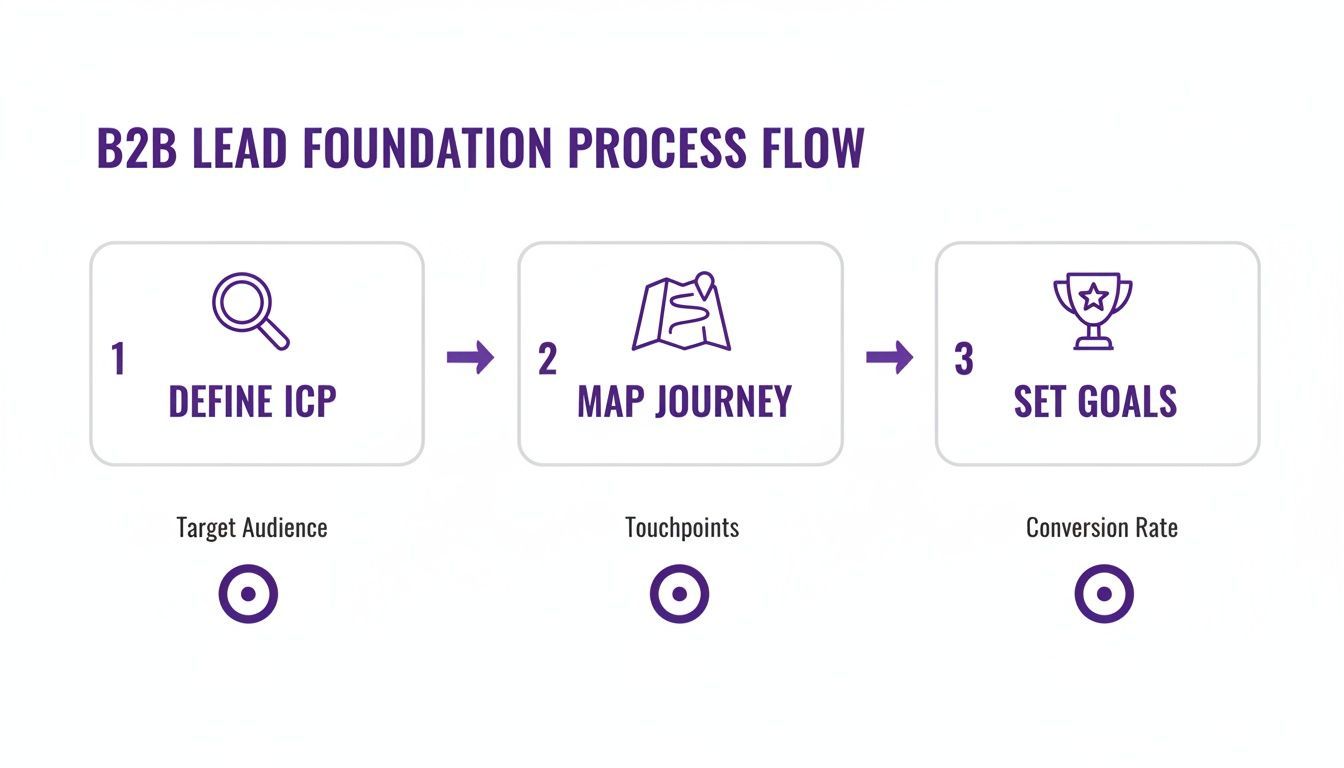
Before a single email is sent or one call is made, you need a blueprint. The strongest B2B lead generation systems are built on clear targeting, clear process, and clear goals. If you skip this foundation, your team ends up chasing low-fit accounts, wasting time on weak leads, and filling the funnel with activity instead of opportunity.
The starting point is understanding exactly who you sell to, what makes them a good fit, and how large the opportunity really is. This is what turns lead generation from a scattered set of tactics into a focused revenue engine.
Define Your Ideal Customer Profile
The most important part of the foundation is your Ideal Customer Profile (ICP). This is not a vague idea like “B2B tech companies.” It is a detailed description of the type of company that gets the most value from your product and is most likely to become a successful long-term customer.
Think of your ICP as the filter for every decision your sales and marketing team makes. It shapes your targeting, your messaging, your channel strategy, and even how you qualify opportunities later in the process.
To build a useful ICP, look at your best customers and identify the patterns they share:
- Industry or Vertical: Which sectors get the strongest results from your solution?
- Company Size: What employee range or revenue range is the best fit?
- Geography: Which regions, countries, or local markets matter most?
- Technology Stack: Do your best customers use tools like Salesforce, HubSpot, Slack, or a specific ERP?
- Pain Points: What expensive or frustrating business problem are they trying to solve?
- Buying Context: Who usually owns the problem, influences the decision, and approves the budget?
A well-defined ICP is the difference between a high-efficiency lead generation engine and a pipeline filled with companies that were never likely to buy in the first place.
When your ICP is precise, your lead generation becomes more focused. Instead of saying “we sell to B2B companies,” you can say something like “we sell to SaaS companies with 50–200 employees in North America that use Salesforce and are actively trying to improve sales efficiency.” That level of clarity makes every later stage easier.
Map Your Total Addressable Market
Once your ICP is defined, the next strategic step is understanding your Total Addressable Market (TAM). TAM is the total revenue opportunity available if every company matching your ICP became a customer.
You will never capture all of it, but mapping TAM is still useful because it helps you:
- Validate the niche: make sure the market is large enough to support your goals.
- Prioritize segments: identify where the best clusters of opportunity exist.
- Set realistic goals: work backward from market size when planning pipeline and revenue targets.
This prevents your team from over-investing in markets that are too small, too crowded, or poorly aligned with your strengths.
Map the Core Stages of the Process
Once you know who you want to sell to, you need a clear view of how prospects move through your lead generation system. This gives marketing and sales a shared roadmap and makes the process easier to manage and improve.
At a high level, a modern B2B lead generation process starts with prospect data, then moves through outreach, qualification, nurturing, and conversion.
Core Stages of the B2B Lead Generation Funnel
| Funnel Stage | Objective | Key Activities |
|---|---|---|
| Top of Funnel (TOFU) | Generate awareness and capture interest. | Content marketing, SEO, social media, webinars, event visibility. |
| Middle of Funnel (MOFU) | Nurture and educate leads. | Email sequences, case studies, guides, demos, retargeting. |
| Bottom of Funnel (BOFU) | Convert qualified leads into customers. | Sales calls, proposals, negotiations, proof of value, closing. |
This structure keeps your team aligned on what each stage is supposed to achieve and helps you spot where deals are getting stuck.
Finding and Qualifying High-Potential Prospects
With the strategic foundation in place, the next step is building a list of companies and contacts that actually match your ICP. This is where planning turns into execution.
The goal is not to build the biggest list possible. It is to build the right list: a focused set of companies and decision-makers who are far more likely to become real opportunities.
The Traditional Method: Manual Prospecting
Many teams still approach prospecting as a manual research task. They search LinkedIn, industry directories, company websites, and event pages, then copy and paste names, titles, and company data into a spreadsheet by hand.
This works on a very small scale, but it becomes slow and error-prone as soon as the list gets bigger. Manual prospecting also creates inconsistent data, duplicate records, incomplete profiles, and a large amount of low-value administrative work.
The Modern Solution: Automated Profile Extraction
A faster and more scalable approach is to automate the profile collection stage. Instead of treating prospecting like data entry, modern no-code tools let you extract structured profile data directly from the web in one workflow.
With a tool like ProfileSpider, you can go to a LinkedIn results page, a company team page, a member directory, or an event site and extract the visible profiles into a clean list. Names, job titles, companies, profile URLs, and other public data can be collected in seconds instead of hours. If you need to find public social profiles connected to a prospect or company, the ProfileSpider Social Link Finder can help fill that gap before outreach.
The modern approach to B2B prospecting is not about working harder. It is about using better systems to collect structured data quickly, so your team can spend more time on outreach and relationship-building.
This is especially useful when working with high-density prospect sources such as speaker pages, sponsor pages, exhibitor lists, team pages, LinkedIn searches, and professional directories.
From Raw Profiles to Enriched Records
Finding a person’s name and title is only the beginning. Many prospect lists are incomplete at first. The most important contact details, such as email addresses, phone numbers, or company data, may still be missing.
This is where data enrichment becomes a critical part of the process. Enrichment fills in the missing details and turns a partial profile into a contact record your team can actually use for outreach.
Instead of manually chasing missing information across multiple tabs, modern workflows let you scrape the initial profile data, then enrich selected profiles afterward. This keeps your lead list cleaner, more complete, and far more actionable.
Why a Privacy-First Approach Matters
When you are collecting and organizing prospect data, the way that data is stored matters. Many legacy scraping tools are cloud-based, which means your lead data is processed or stored on external servers. That creates additional compliance, security, and privacy concerns.
A privacy-first workflow keeps the extracted data local to your browser or machine, giving your team more control over how information is reviewed, stored, and used.
In lead generation, data quality matters. But data control matters too. A privacy-first workflow helps you collect public data more responsibly while keeping ownership and review in your hands.
Qualify Prospects Before They Reach Sales
Once you have a list of contacts, the next job is qualification. A raw list is not the same thing as a true pipeline opportunity. Not every person who matches a search is worth your sales team’s time.
This is why qualification should happen before every lead is handed over to sales. The goal is to separate good-fit prospects from low-priority or poorly timed ones.
Applying a Qualification Framework
A common framework for qualification is BANT: Budget, Authority, Need, and Timeline. It is useful, but it works best as a guide rather than a rigid script.
- Budget: is there enough commercial value or internal funding to support your solution?
- Authority: is your contact a decision-maker, a recommender, or someone with low influence?
- Need: does the company have a real pain point your product solves?
- Timeline: is this a near-term project or a vague future idea?
The most effective qualification does not feel like an interrogation. It should feel like a conversation built around the prospect’s priorities and business context.
How to Qualify Without Interrogating
Rather than asking rigid questions like “What is your budget?” or “Are you the decision-maker?”, use more natural prompts that reveal the same information:
- To understand budget: “How are projects like this usually funded?” or “What kind of ROI would make this worth prioritizing?”
- To understand authority: “Who else would typically be involved in evaluating something like this?”
- To validate need: “What is the biggest headache in the current process?”
- To understand timeline: “Is there something happening internally that makes this important right now?”
This approach builds trust while still helping you identify whether a lead is worth deeper follow-up.
Building and Segmenting Actionable Lead Lists
Once prospects are sourced and lightly qualified, the next step is turning that raw data into a structured lead asset your team can actually use. A spreadsheet full of unorganized names is not a strategy. It needs cleanup, segmentation, and context.
Clean the Data Before It Becomes a Problem
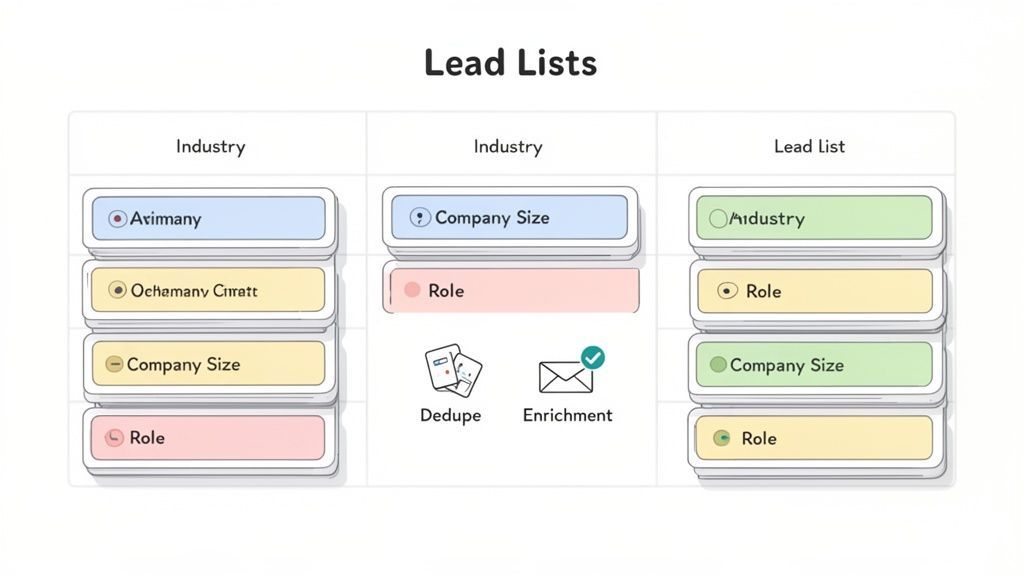
The first task is basic hygiene. That includes standardizing job titles, removing duplicate entries, fixing obvious inconsistencies, and flagging records that are missing key fields.
If this step is skipped, the consequences show up later as poor personalization, double-contacting the same prospect, and messy CRM imports.
Segment by Business-Relevant Criteria
After cleanup, segment the list into smaller groups that support more relevant outreach. This is where your lead list starts becoming a real strategic asset instead of a flat export.
You can segment by:
- Industry: SaaS, manufacturing, healthcare, logistics, finance
- Company size: startup, mid-market, enterprise
- Role or seniority: founder, VP, director, manager
- Pain point: hiring, sales efficiency, customer retention, operational cost
- Source: webinar attendees, event sponsors, directory members, LinkedIn search results
Segmentation is what turns generic outreach into relevant outreach. The more precisely you group your contacts, the easier it becomes to send messages that actually resonate.
Add Notes, Tags, and Priority Signals
Strong lead lists are not just organized by fields. They also contain useful context. This can include tags such as #DecisionMaker, #Tier1, or #FollowUp, as well as short notes like “hiring SDRs,” “active in RevOps,” or “found on speaker page.”
These small details make it easier to personalize outreach, prioritize the right contacts, and coordinate work across the team.
Crafting Outreach That Actually Gets Replies
Once your lead list is clean and segmented, the next challenge is outreach. This is where your prospecting and list-building work either turns into real conversations or gets ignored.
The goal of outreach is not to pitch immediately. It is to start a relevant conversation. That means your messaging needs to feel specific, useful, and respectful of the prospect’s time.
Go Beyond Basic Personalization
Personalization is more than using a first name field. Strong outreach shows that you understand something real about the person or company you are contacting.
Useful personalization triggers include:
- Recent company news: funding, expansion, hiring, product launch
- LinkedIn activity: recent posts, comments, or thought leadership
- Shared context: a mutual connection, event, or industry topic
- Role-based context: known operational or strategic pain points related to their function
The best outreach does not start with your product. It starts with the prospect’s world, their priorities, and a reason they should care.
Use a Multi-Touch, Multi-Channel Sequence
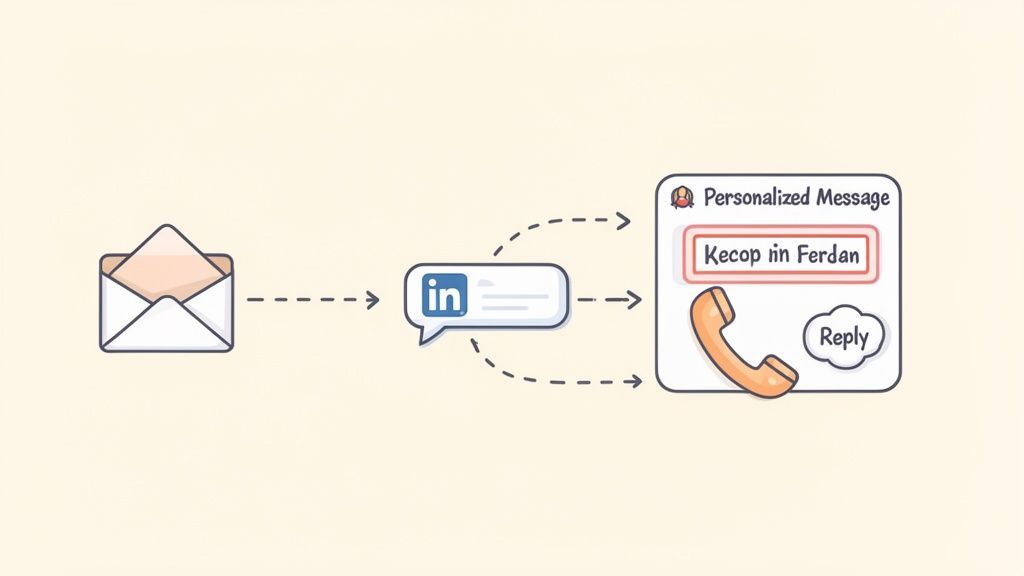
One message is rarely enough. A strong B2B outreach process uses several thoughtful touchpoints across email, LinkedIn, and sometimes phone, with each one adding a little more value.
A practical outreach sequence could look like this:
- Day 1: Send a personalized LinkedIn connection request with no hard pitch.
- Day 2: Send a short email tied to a specific problem, insight, or trigger.
- Day 4: Follow up with a light LinkedIn message referencing the topic.
- Day 7: Send a second email that adds value, such as a case study, framework, or useful observation.
- Day 10: Send a final polite close-the-loop message.
This structure balances persistence with professionalism and gives the prospect multiple chances to engage without feeling overwhelmed.
Make Follow-Ups Worth Opening
Most follow-ups fail because they add nothing new. Messages like “just checking in” or “bumping this up” create noise instead of value.
Instead, each follow-up should include something useful:
- a relevant case study
- a practical tip
- a short insight based on their market or role
- a resource connected to the challenge you mentioned earlier
This makes your outreach feel more consultative and increases the chances of getting a thoughtful reply.
Use Content and Events to Pull Inbound Leads to You
Outbound fills pipeline directly, but inbound strengthens the system over time. High-quality content and well-chosen events can attract ideal prospects before they are even actively looking for a vendor.
Use Content to Build Trust Before Outreach
Content helps you answer your audience’s questions before a sales conversation starts. Useful blog posts, guides, case studies, comparison pages, and webinars can position your company as a credible expert instead of just another cold outreach sender.
Different content formats support different stages of the funnel:
- Top of Funnel: educational blog posts, industry explainers, trend pieces
- Middle of Funnel: case studies, frameworks, webinars, comparison content
- Bottom of Funnel: demos, product walkthroughs, implementation content, ROI material
The best B2B content does not sell a product directly. It helps a buyer make progress on a problem, which is what earns attention and trust.
Use Events as Prospect Sources
Events can also be powerful lead sources. Industry conferences, trade shows, webinars, and local business events often bring together highly relevant companies in one place.
The opportunity is not just at the event itself. It also exists on event websites, where speaker pages, sponsor lists, exhibitor directories, and attendee-related content often contain highly targeted public prospect data.
A practical workflow looks like this:
- Identify an event where your ICP is likely to be present.
- Visit the speaker, sponsor, or exhibitor pages.
- Extract the public profile data into a structured list.
- Segment and prioritize the contacts before pre-event or post-event outreach.
This turns one-off event participation into a more scalable lead generation channel.
Measuring Performance and Optimizing Your Engine
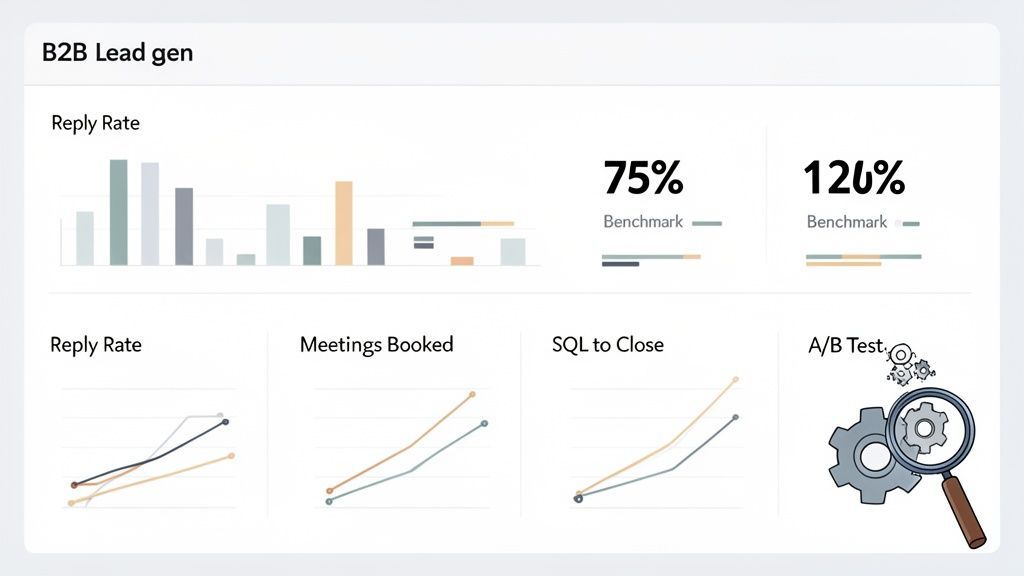
A lead generation process is not something you build once and leave untouched. It needs measurement, feedback, and iteration. Otherwise, it becomes a collection of disconnected activities instead of a system that improves over time.
Track the Metrics That Actually Matter
Rather than focusing on vanity metrics, track the numbers that tell you how well the funnel is converting from stage to stage.
- Positive reply rate: how many prospects respond favorably
- Meeting booked rate: how many conversations turn into real meetings
- Sales Qualified Lead (SQL) rate: how many leads meet your qualification threshold
- Lead-to-opportunity conversion rate: how many leads enter the sales process
- Lead-to-customer conversion rate: how many leads become customers
- SQL-to-close rate: how many qualified opportunities convert to revenue
The point of measurement is not to create more reporting. It is to understand where the system is strong, where it is weak, and what needs to be improved next.
Use Testing to Improve the Process
Once you have baseline numbers, start testing one variable at a time. This helps you improve performance with less guesswork.
Useful A/B testing areas include:
- Subject lines: direct vs. curiosity-based
- Calls to action: soft CTA vs. meeting request
- Channel mix: email-first vs. LinkedIn-first sequences
- Segmentation: industry-specific messaging vs. broader role-based messaging
Small improvements in targeting, messaging, or sequencing often compound into meaningful gains across the funnel.
Refine Your ICP Using Real Performance Data
Your best source of ICP insight is not theory. It is performance. Over time, your conversion data will show which segments reply more often, book more meetings, qualify more easily, and close at a higher rate.
That information should feed back into your targeting. If one segment consistently performs better than another, your lead generation strategy should shift accordingly. This is how the process becomes smarter over time.
Build a Repeatable Lead Generation Process, Not Just More Activity
The strongest B2B lead generation systems are built on clear targeting, efficient sourcing, thoughtful qualification, relevant outreach, and disciplined measurement. When these pieces work together, lead generation becomes more predictable and much easier to scale.
If you want to make the sourcing and list-building part of that process much faster, a no-code tool like ProfileSpider can help you extract public profile data from LinkedIn, team pages, event sites, and directories in a much more efficient workflow. That gives your team more time to focus on messaging, qualification, and closing real opportunities.