

A Chrome web-scraping extension can turn tables, directories, product listings, profiles, and search results into structured data without requiring Python or a custom crawler.
However, the extensions in this category solve very different problems. Some detect simple HTML tables. Others use visual selectors, AI prompts, reusable scraping recipes, or complete browser-automation workflows. Several are genuinely free for local use, while others provide only limited credits or a time-limited trial.
This guide compares 12 of the best free and freemium Chrome extensions for web scraping. It covers their ideal use cases, free-plan limitations, export formats, learning curves, and privacy considerations so you can choose the right tool for your task.
Important: Product plans and extension features change. Confirm the current pricing, permissions, and usage limits on the official product page or Chrome Web Store listing before installing a tool.
Best Chrome Web-Scraping Extensions at a Glance
| Extension | Best For | Free Access | Typical Output | Setup Level |
|---|---|---|---|---|
| ProfileSpider | People, company, lead, and profile lists | Free plan | CSV, Excel, JSON | Very low |
| Web Scraper | Structured multi-page crawling | Free local extension | CSV | High |
| Instant Data Scraper | Fast table and list extraction | Free | CSV, XLS, XLSX | Very low |
| Data Miner | Template-based scraping | Limited monthly free plan | CSV, Excel | Medium |
| Simplescraper | Visual scraping and cloud workflows | Free extension and limited credits | CSV, JSON, API outputs | Low–Medium |
| Bardeen | Scraping connected to other apps | Limited free access | Sheets, CRMs, databases | Medium |
| Axiom.ai | Full browser automation | Free trial, not permanent free tier | Sheets and workflow outputs | Medium–High |
| Table Capture | HTML and div-based tables | Free core features; Pro exports | Clipboard, Sheets, paid CSV/Excel | Very low |
| Chat4Data | Prompt-based AI scraping | Free to start | Excel, CSV, JSON | Low |
| AnyPicker | Visual pattern-based extraction | Free extension | CSV, Excel | Low |
| NoCoding Data Scraper | Simple no-code list extraction | Free entry option | Excel, Google Sheets | Low |
| Octoparse AI Web Automation | Building Octoparse automation tasks | Free companion extension | Depends on Octoparse platform | Medium–High |
1. ProfileSpider
Best for: Extracting and organizing people, company, product, and lead profiles from webpages.
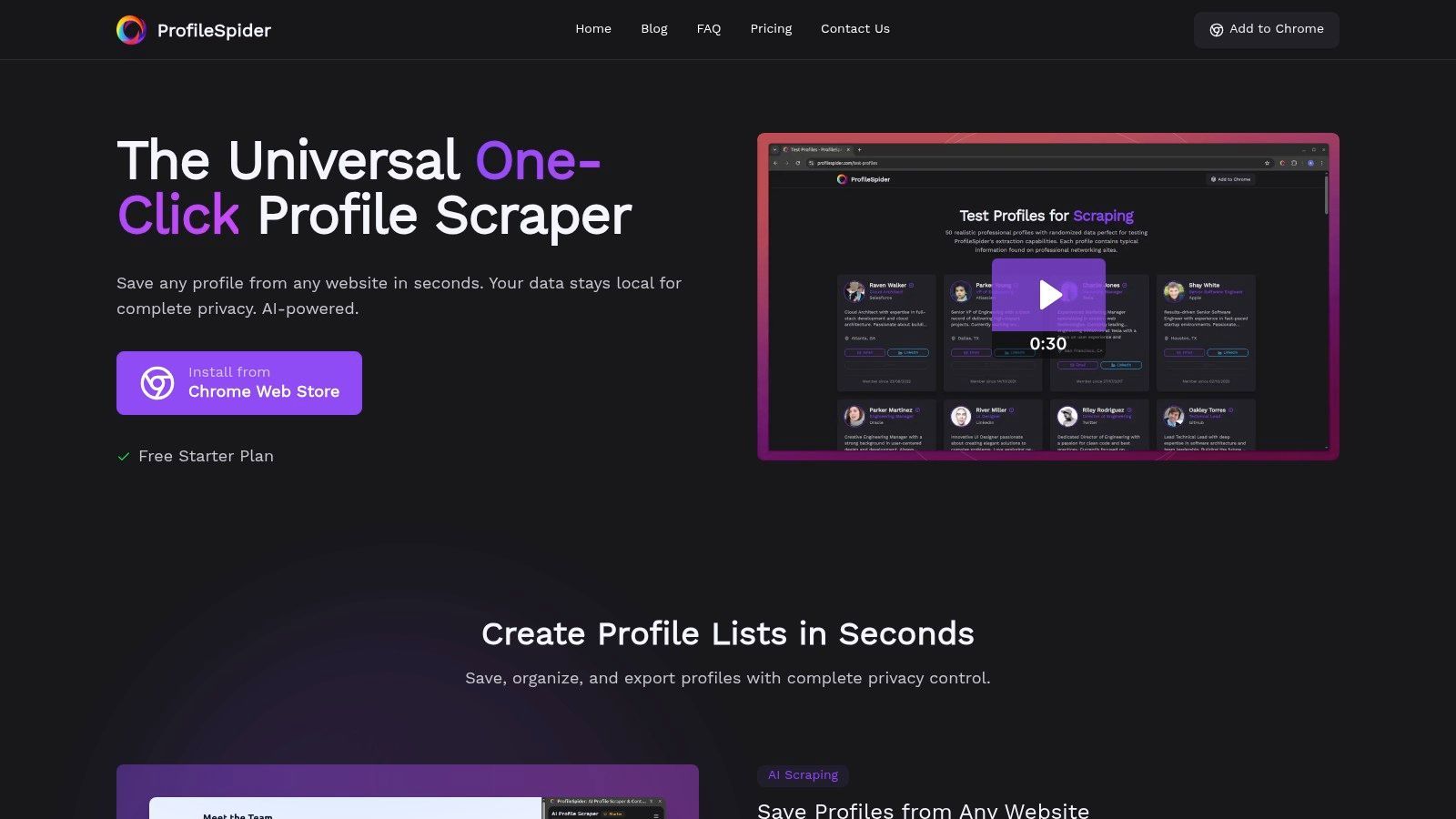
ProfileSpider is an AI-assisted lead scraper and list builder designed for sales, recruiting, marketing, and research workflows. Instead of asking the user to define CSS selectors, it analyzes the loaded page and attempts to identify repeated people, company, product, or listing records.
Core Features
- AI-assisted extraction of repeated profiles and listings
- People and company profile extraction
- Names, titles, companies, locations, URLs, visible contact details, and social links where available
- Custom lists, tags, notes, search, and filters
- Per-profile email finding
- Enrichment from selected linked URLs
- CSV, Excel, and JSON export
- All-column or visible-column exports
Where It Works Best
ProfileSpider is particularly suitable for:
- Company team and leadership pages
- Association and membership directories
- Conference speaker pages
- Public business directories
- Portfolio and agency pages
- Search-result pages containing repeated profiles
- Recruiting and lead-research workflows
Important Limitations
ProfileSpider extracts the current loaded page. It does not automatically crawl every result page, bypass CAPTCHAs, or retrieve data that the website has not loaded into the browser.
Dynamic content may need to be opened, filtered, or scrolled into the document before extraction. Results should also be reviewed against the source, especially when fields are missing or cards use inconsistent layouts.
Privacy and Storage
Saved profiles, lists, tags, and notes are stored locally in the browser’s IndexedDB. Account, billing, credit, team, AI-extraction, enrichment, and email-finding functions still use backend or third-party services where required.
Clearing browser data or uninstalling the extension can remove locally saved records, so important lists should be exported regularly.
| Pros | Cons |
|---|---|
| Very low setup requirement | Focused primarily on profiles and repeated entities rather than arbitrary crawling |
| Combines extraction with lists, tags, notes, and export | Does not automatically crawl all result pages |
| Works across many page structures without manual selectors | AI-extracted fields still require review |
| CSV, Excel, and JSON support | Page and profile limits depend on the plan |
Official website: ProfileSpider
2. Web Scraper
Best for: Building repeatable, structured crawls through categories, pagination, and detail pages.
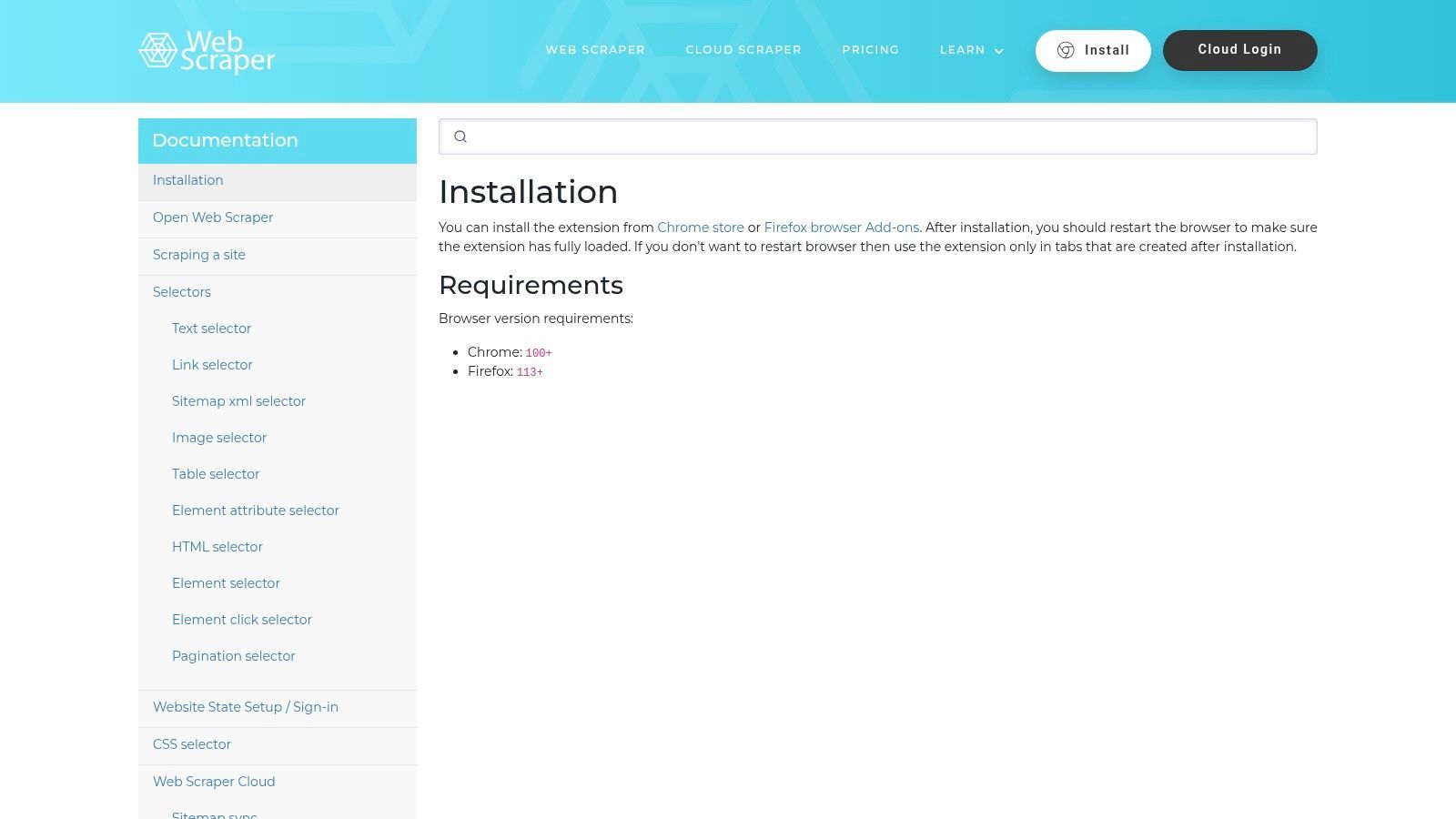
Web Scraper is one of the most established browser-based scraping tools. It uses a visual sitemap system in which users define selectors and relationships between list pages, links, pagination, and detail pages.
Core Features
- Visual sitemap builder
- Text, link, image, attribute, and element selectors
- Pagination and linked-detail-page navigation
- Support for dynamic and JavaScript-rendered content
- Free local browser execution
- Paid cloud scheduling and API workflows
Best Use Cases
- E-commerce categories
- Directories with linked detail pages
- Forum and article archives
- Repeatable multi-page projects
- Users who want detailed selector control
| Pros | Cons |
|---|---|
| Free for local browser scraping | Steeper learning curve than one-click tools |
| Strong multi-page workflow support | Sitemaps can break when websites change |
| Detailed selector control | Large jobs can consume browser resources |
| Extensive documentation | Cloud execution and scheduling are paid |
Official website: Web Scraper
3. Instant Data Scraper
Best for: Quickly extracting a visible table or repeated list with minimal setup.
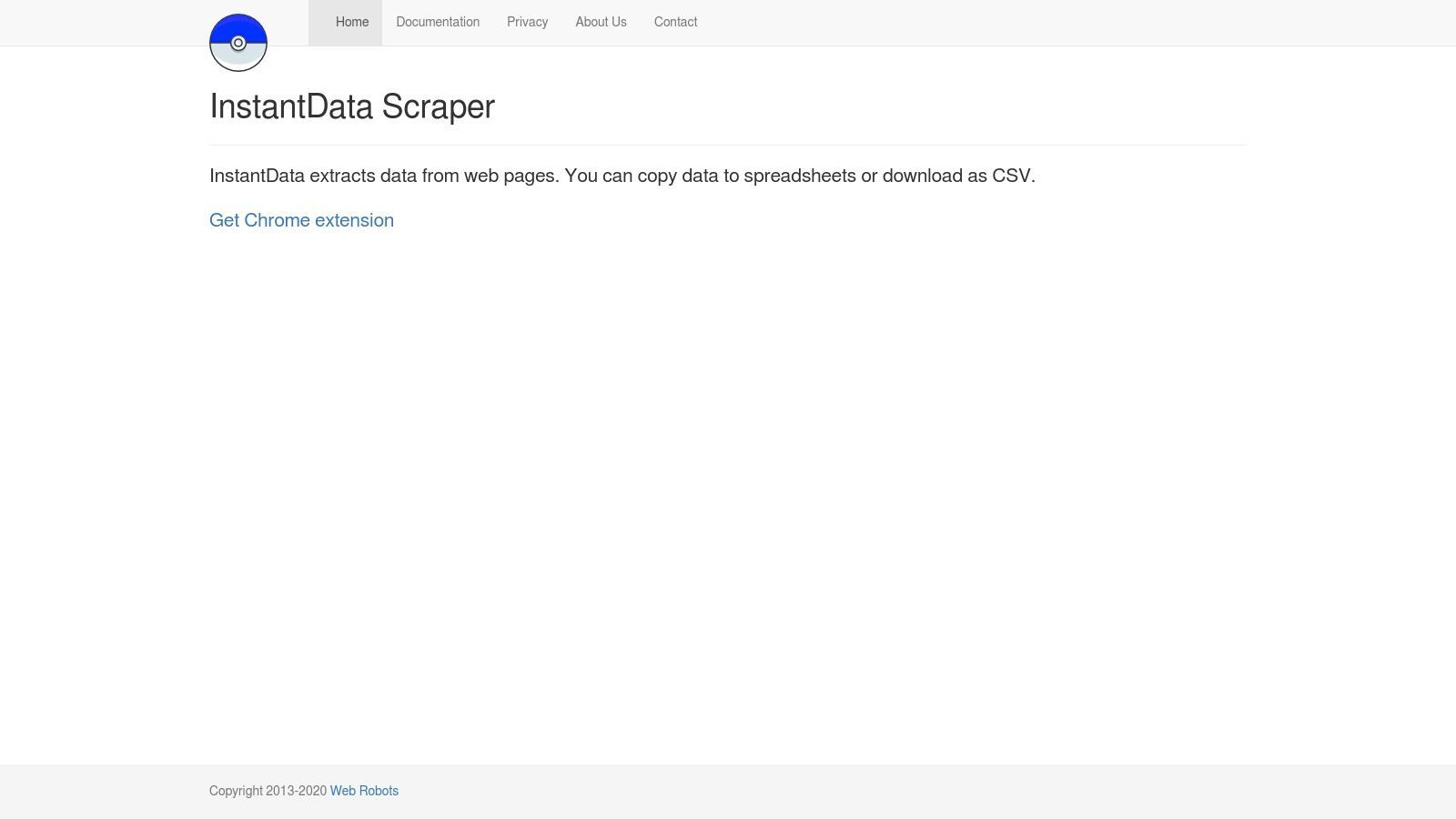
Instant Data Scraper uses heuristic analysis to identify likely tabular or repeated data in a webpage. Users open the extension, inspect the detected dataset, switch between alternative detected tables where necessary, and export the result.
Core Features
- Automatic table and list detection
- Minimal setup
- Alternative-table selection
- Pagination controls
- CSV, XLS, and XLSX exports
Best Use Cases
- Simple product grids
- Public data tables
- One-off list exports
- Results pages with consistent repeated rows
Limitations
Instant Data Scraper can struggle when pages use inconsistent cards, virtualized lists, data hidden behind interactions, or structures it cannot recognize. Content loaded through infinite scroll must generally be loaded before it can be extracted.
| Pros | Cons |
|---|---|
| Fast and easy to learn | Can return the wrong repeated structure |
| Suitable for quick one-page jobs | Less suitable for complex linked-page workflows |
| Exports common spreadsheet formats | Limited semantic understanding of fields |
Official listing: Instant Data Scraper
4. Data Miner
Best for: Scraping popular websites using reusable community recipes.
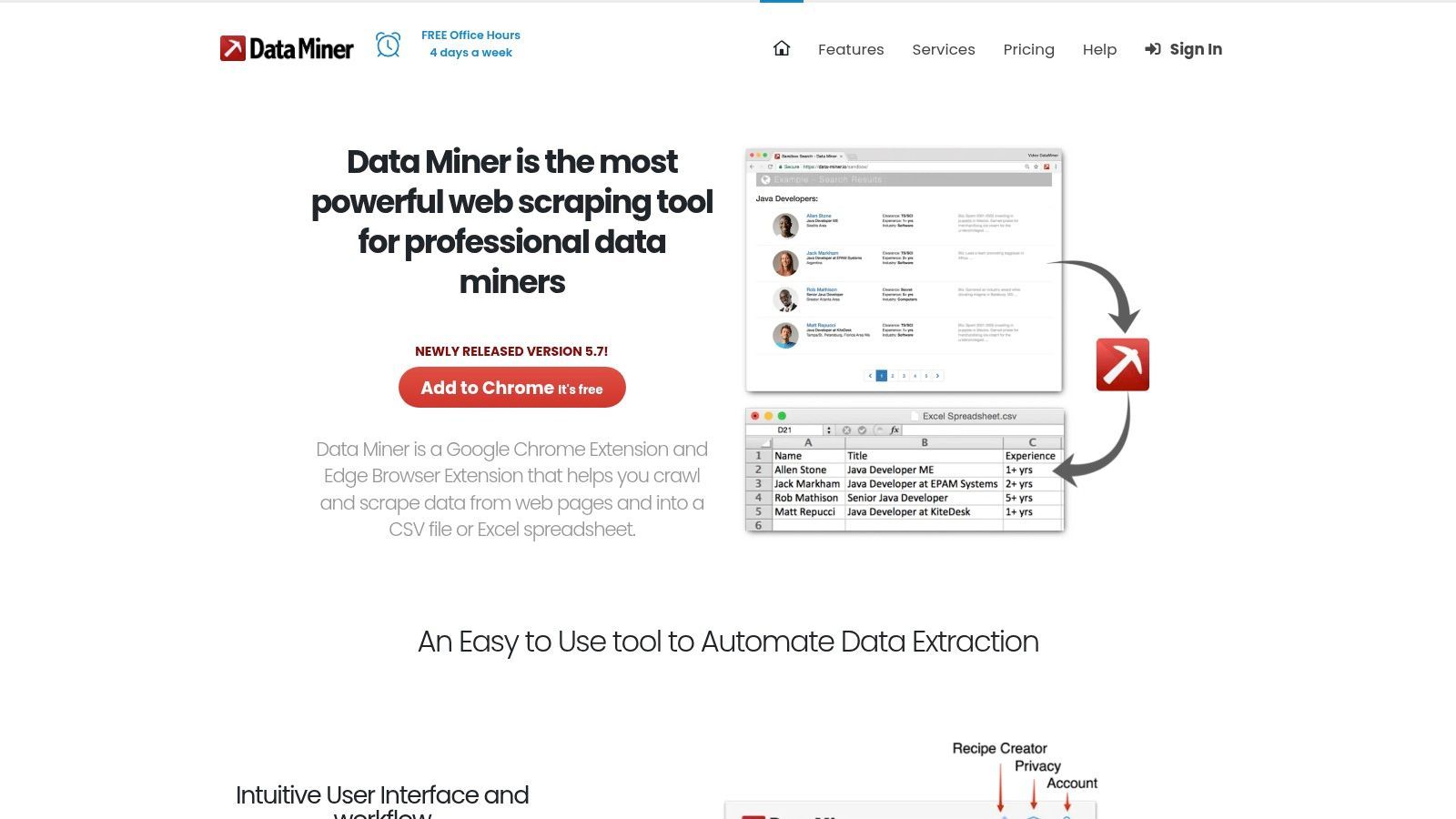
Data Miner combines visual selector creation with a large collection of public scraping recipes. When a recipe already exists for the target website, users can often preview and run it without creating selectors from scratch.
Core Features
- Public and private scraping recipes
- Visual recipe builder
- Table and list extraction
- Next-page automation
- CSV and Excel output
- Limited free monthly page allowance
Best Use Cases
- Popular websites with existing recipes
- Users who prefer templates
- Repeatable single-site extraction
- Spreadsheet-oriented workflows
| Pros | Cons |
|---|---|
| Large recipe ecosystem | Recipes can become outdated after page changes |
| Supports custom visual rules | Monthly page limits apply to the free plan |
| Useful preview workflow | Some domains or automation features may be restricted |
Official website: Data Miner
5. Simplescraper
Best for: Visual browser scraping that can later be extended into cloud, API, and batch workflows.
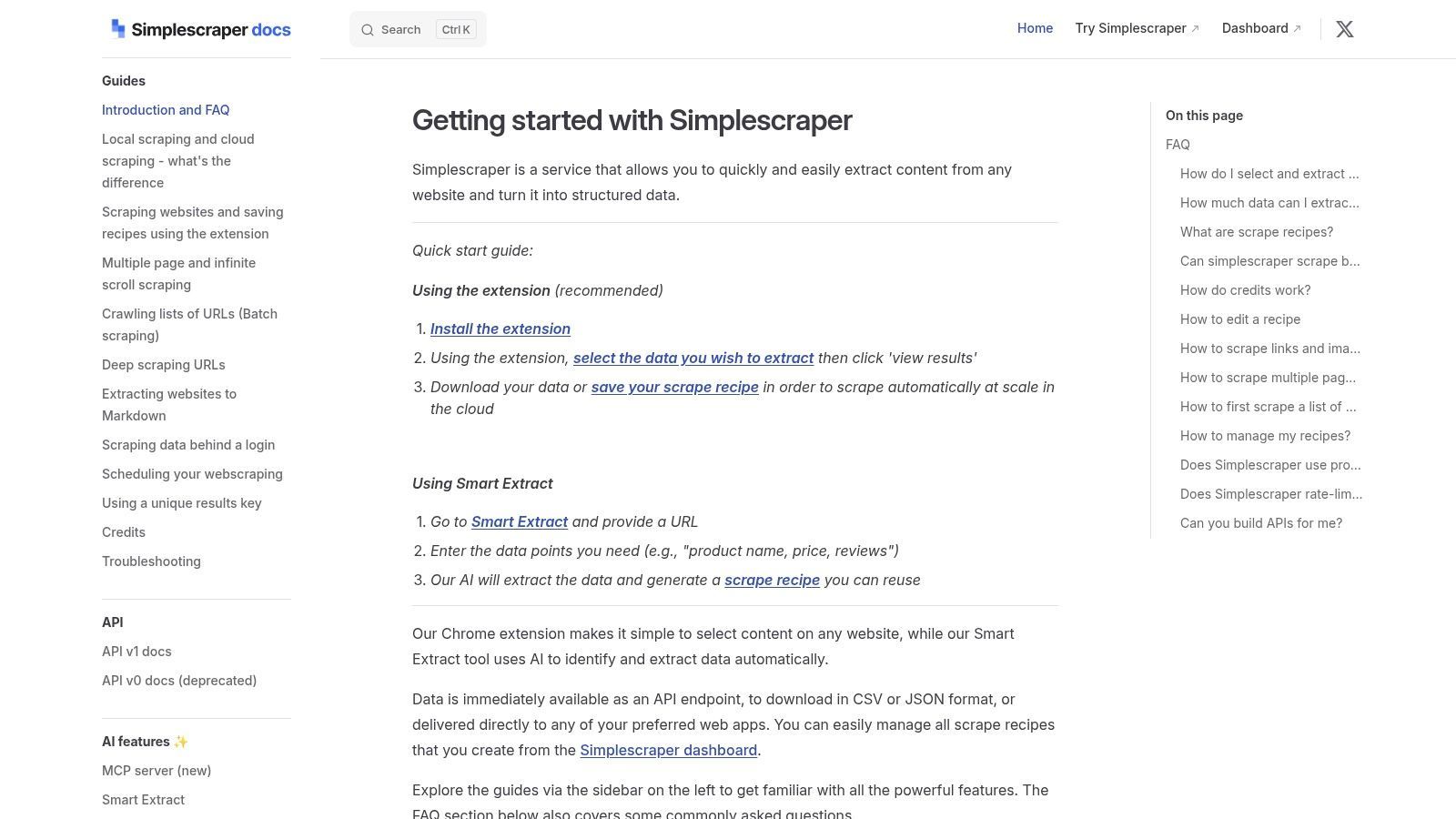
Simplescraper provides a Chrome side panel for detecting lists and selecting webpage data. The local extension is suitable for quick extraction, while its wider platform supports batch jobs, APIs, scheduled cloud tasks, and integrations.
Core Features
- Automatic list detection
- Point-and-click field selection
- List and detail-page recipes
- CSV and structured data output
- Cloud scraping and APIs
- Batch URL processing
- Limited free cloud credits for new accounts
| Pros | Cons |
|---|---|
| Friendly browser interface | Cloud usage consumes credits |
| Can grow from local extraction into automation | Advanced workflows take more setup |
| Useful for developers and non-coders | Dynamic or irregular pages may require manual adjustments |
Official website: Simplescraper
6. Bardeen
Best for: Scraping data and immediately sending it into another application or workflow.
Bardeen is broader than a conventional web scraper. It combines browser data extraction with automation steps that can create spreadsheet rows, update databases, write summaries, or send information to connected tools.
Core Features
- AI-assisted workflow generation
- Web data scraping
- Reusable playbooks
- Google Sheets, CRM, Notion, and application integrations
- Multi-step browser workflows
Best Use Cases
- Scrape-and-send workflows
- Sales and operations automation
- Research workflows involving several applications
- Teams already using no-code automation
| Pros | Cons |
|---|---|
| Connects scraping directly to business applications | More complex than a dedicated table scraper |
| Large workflow and integration ecosystem | Usage and premium features may require payment |
| Can automate actions after extraction | Website changes can break existing playbooks |
Official listing: Bardeen
7. Axiom.ai
Best for: No-code browser bots that scrape data and interact with websites.
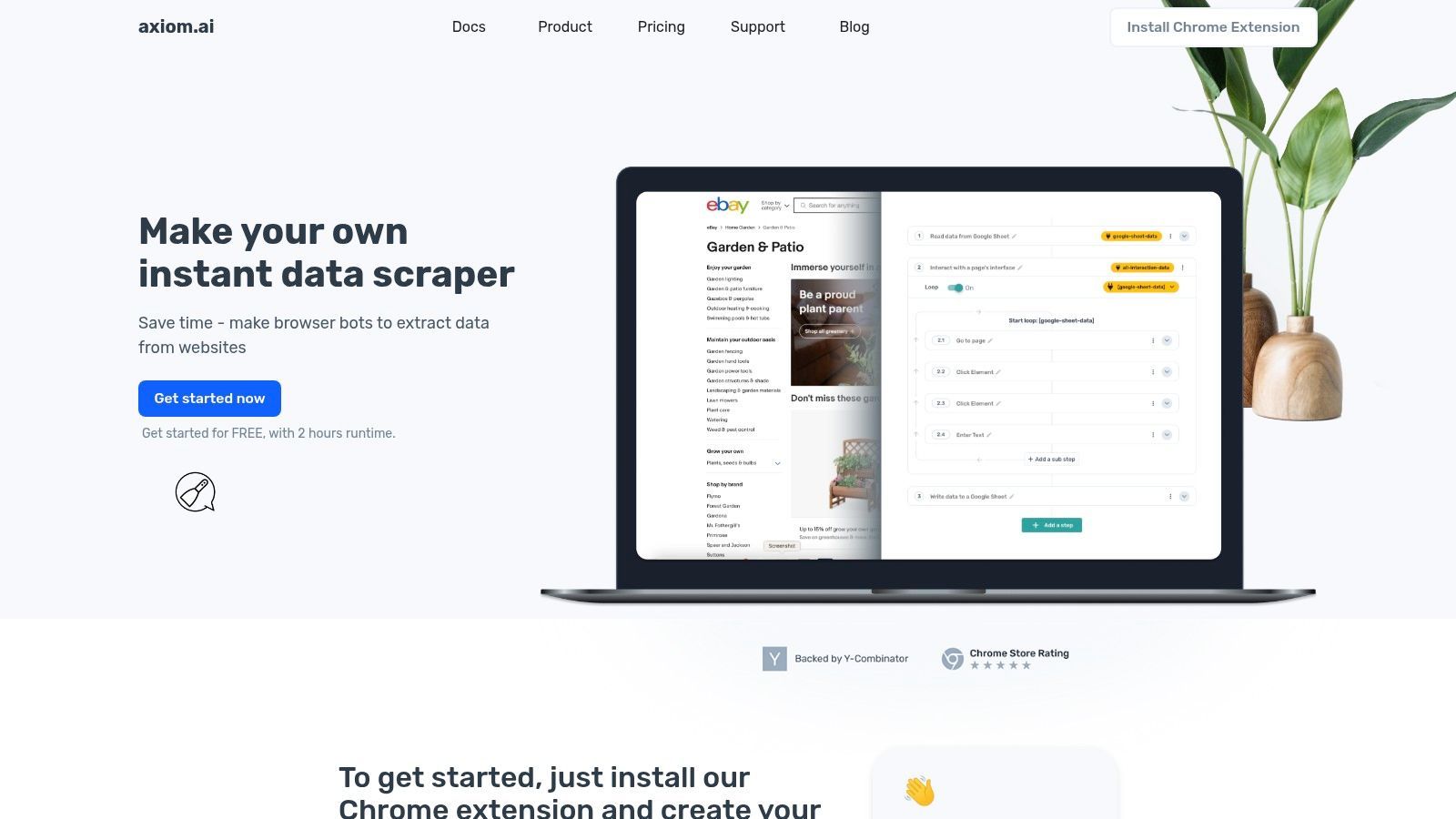
Axiom.ai allows users to build browser automations containing steps such as reading spreadsheet rows, visiting URLs, clicking buttons, completing forms, extracting data, and writing results back to Google Sheets.
Core Features
- No-code browser bot builder
- Data extraction
- Clicks, forms, navigation, and UI interaction
- Google Sheets integration
- Desktop and cloud execution options
- Scheduling and integrations on paid plans
Free Access Clarification
Axiom provides free trial runtime rather than a permanent unlimited free tier. It is therefore better described as a freemium or trial-based browser automation product, not a completely free scraper.
| Pros | Cons |
|---|---|
| Handles complex browser interactions | No permanent free tier |
| Good spreadsheet integration | Multi-step bots require testing and maintenance |
| Suitable for complete workflows, not only extraction | More complexity than one-click scrapers |
Official website: Axiom.ai
8. Table Capture
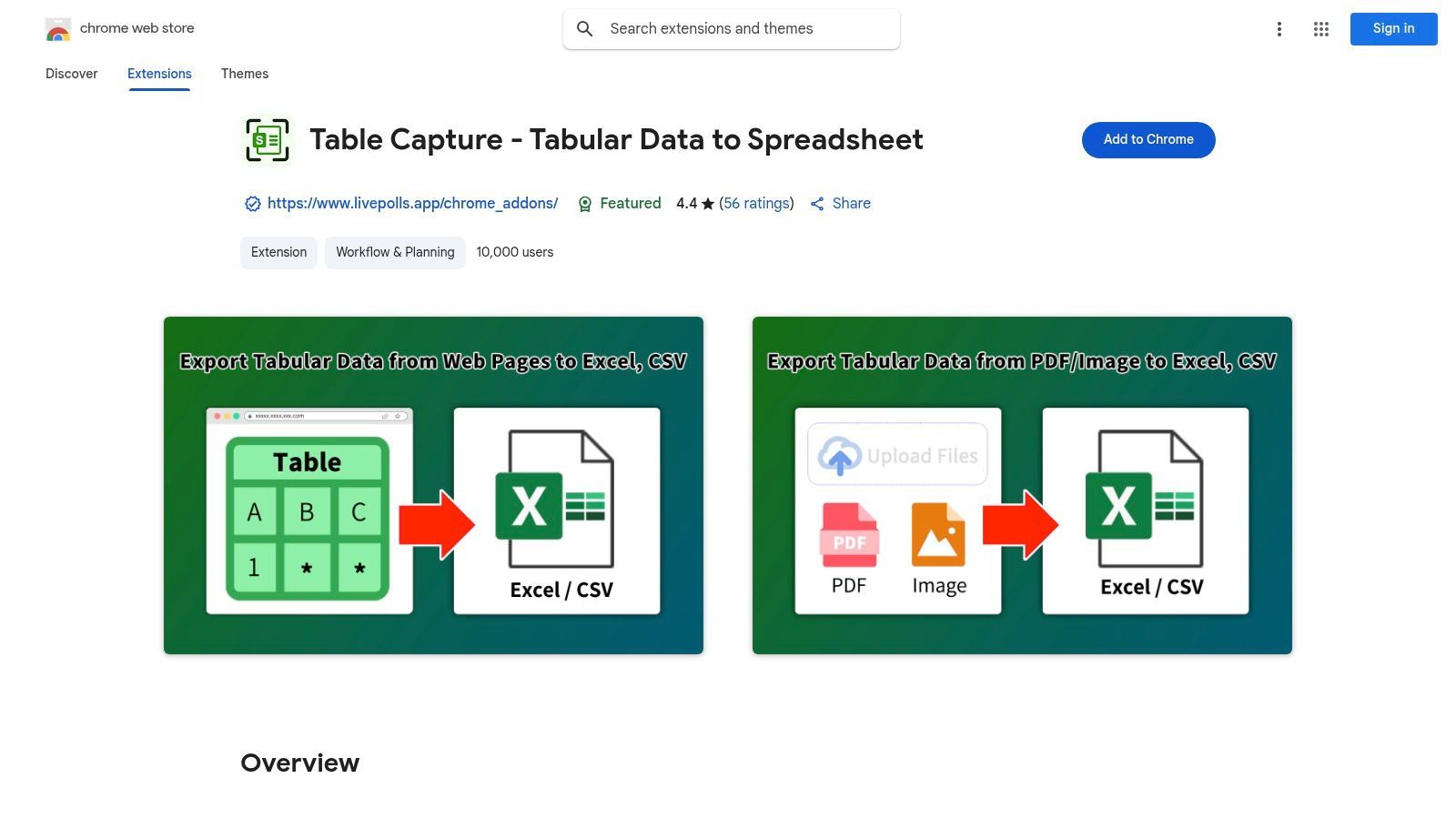
Best for: Copying conventional and div-based tables into a spreadsheet.
Table Capture is a specialized extension for extracting tabular data. Its free features support copying tables and exporting to Google Sheets, while several direct-download and advanced capture features are part of the paid Pro version.
Core Features
- HTML table detection
- Div-based repeated-data capture
- Clipboard export
- Google Sheets export
- Batch table selection
- Excel, CSV, multi-page, and scroll-capture features on paid tiers
| Pros | Cons |
|---|---|
| Excellent for straightforward table extraction | Several advanced exports require Pro |
| Low learning curve | Not intended as a general-purpose site crawler |
| Can capture some div-based layouts | Free export and row limitations may apply |
Official listing: Table Capture
9. Chat4Data
Best for: Describing a scraping task in natural language rather than configuring selectors manually.
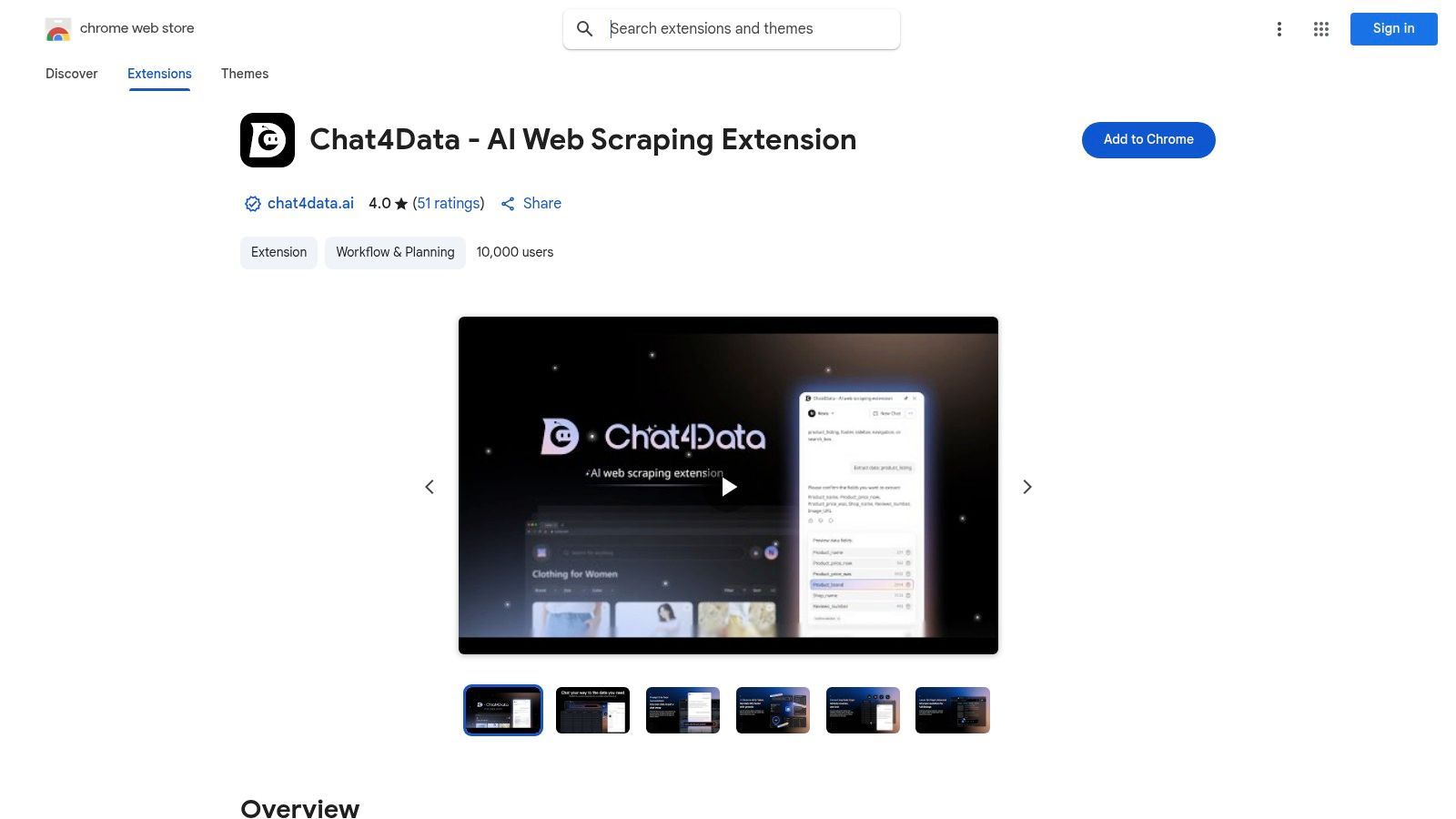
Chat4Data is an AI web-scraping agent controlled through prompts. Users describe the target website, navigation steps, and desired fields. The agent creates a plan, runs the workflow in the browser, and outputs structured data.
Core Features
- Natural-language scraping instructions
- AI-generated execution plans
- Pagination and infinite-scroll handling
- One-level detail-page navigation
- Human intervention for login or CAPTCHA steps
- Excel, CSV, and JSON output
Limitations
Prompt-driven automation can be less predictable than manually configured selectors. Complex sites may still require intervention, and the extension should be used only on pages and for purposes permitted by the target website.
| Pros | Cons |
|---|---|
| Very low barrier for non-technical users | AI execution may vary by page structure |
| Can express multi-step tasks in plain language | Less deterministic than manually configured selectors |
| Supports common structured export formats | Heavier usage requires a premium plan |
Official listing: Chat4Data
10. AnyPicker
Best for: Visually selecting repeated content and exporting it without code.
AnyPicker is an AI-assisted visual scraper that attempts to recognize repeating patterns on a webpage. It is designed for users who want more control than automatic table detection but do not want to build a full crawling sitemap.
Core Features
- Visual element selection
- Pattern recognition
- Text, link, image, and attribute extraction
- CSV and Excel export
- Support for pages opened within the active browser session
| Pros | Cons |
|---|---|
| Accessible point-and-click interface | Complex navigation may require another tool |
| Useful for custom fields and repeated elements | Selectors can require adjustment after site changes |
| Spreadsheet-friendly exports | Not a complete cloud crawling platform |
Official listing: AnyPicker
11. NoCoding Data Scraper
Best for: Straightforward no-code extraction into spreadsheet tools.
NoCoding Data Scraper provides a visual workflow for selecting repeated webpage data and exporting the result to Excel or Google Sheets. It is aimed at users who want a relatively simple extraction process without creating code or XPath expressions.
Core Features
- Visual no-code data selection
- Repeated-list extraction
- Spreadsheet export
- Basic web-automation controls
| Pros | Cons |
|---|---|
| Low technical barrier | Less established than larger scraping platforms |
| Spreadsheet-oriented workflow | Complex tasks may require more advanced automation |
| Suitable for quick list extraction | Current plan and feature restrictions should be checked before use |
Official listing: NoCoding Data Scraper
12. Octoparse AI Web Automation
Best for: Users already working within the Octoparse desktop or cloud ecosystem.
Octoparse AI Web Automation is best understood as a companion extension rather than a complete standalone Chrome scraper. It helps the main Octoparse platform identify and interact with webpage elements while the wider application manages the extraction workflow.

Core Features
- Browser-to-Octoparse integration
- Visual element detection
- Point-and-click task construction
- Support for wider Octoparse automation workflows
Important Distinction
The Chrome extension does not replace the main Octoparse platform. Scheduling, cloud execution, data processing, and advanced workflows depend on Octoparse itself and its applicable plan.
| Pros | Cons |
|---|---|
| Simplifies element selection for Octoparse users | Not a standalone scraper |
| Useful for more advanced visual automation | Requires the main Octoparse product |
| Supports complex workflows through the wider platform | Platform pricing and operating-system restrictions may apply |
Official listing: Octoparse AI Web Automation
How to Choose the Best Web-Scraping Chrome Extension
The best extension depends on the structure of the page and what must happen after extraction.
Choose Instant Data Scraper When
- The page contains a clean table or repeated list.
- You need a quick one-time export.
- You do not need linked detail pages or advanced cleanup.
Choose Table Capture When
- The source is primarily an HTML or div-based table.
- Your destination is Excel or Google Sheets.
- You do not need general website crawling.
Choose Web Scraper or Data Miner When
- You need reusable selectors or recipes.
- The workflow spans categories, pagination, or detail pages.
- You are willing to configure and maintain extraction rules.
Choose Simplescraper When
- You want easy browser extraction with an upgrade path to cloud scraping.
- You may later need APIs, batch URLs, or scheduling.
- You prefer a visual side-panel workflow.
Choose Bardeen or Axiom.ai When
- Scraping is only one step in a larger browser workflow.
- You need to click, enter data, update Sheets, or send information to another application.
- You are prepared to build and maintain automations.
Choose Chat4Data When
- You prefer prompts over selectors.
- You want an agent to plan navigation and extraction.
- You accept that AI execution may require review or intervention.
Choose ProfileSpider When
- You are extracting people, companies, products, or lead-style records.
- You want lists, tags, notes, enrichment, and exports in one workflow.
- You do not want to configure a scraper recipe.
- You want to review and organize the records before export.
Free vs. Freemium: What to Check
“Free Chrome scraper” can mean several different things:
- Completely free extension: Core extraction features remain free.
- Free local use: Browser execution is free, while cloud scheduling is paid.
- Monthly allowance: A limited number of pages or credits resets periodically.
- Free trial: Access ends after a runtime or time allowance.
- Free core with paid exports: Basic copying is free, while CSV, Excel, pagination, or automation is paid.
- Companion extension: The extension is free, but it requires a separate paid or freemium platform.
Before choosing a tool, check:
- Monthly page or credit limits
- Whether CSV and Excel export are free
- Whether pagination is included
- Whether cloud execution costs extra
- Whether an account or payment card is required
- Whether the extension works independently
- Which permissions it requests
Privacy and Extension Permissions
Web-scraping extensions often need permission to read and modify content on websites because that access is required to inspect the page and extract data.
Before installing an extension:
- Use the official Chrome Web Store listing.
- Confirm that the publisher matches the official product website.
- Review requested permissions.
- Read the privacy disclosure and policy.
- Check the last update date.
- Review recent user feedback.
- Remove extensions you no longer use.
- Avoid unknown copies with similar names.
Chrome Web Store review and a “Featured” badge can provide useful signals, but they do not replace your own privacy, security, and compliance review.
Responsible Web Scraping
A technically capable extension does not automatically make every extraction permissible.
Review:
- The website’s terms and policies
- Whether an official API or export exists
- Privacy and direct-marketing rules
- Copyright and database rights
- Access controls and technical restrictions
- The sensitivity of the information
- The purpose and scale of collection
- Security and retention of exported data
Do not use an extension to bypass CAPTCHAs, paywalls, login restrictions, or explicit technical blocks. Stop when a website restricts access or the extension triggers account warnings.
Frequently Asked Questions
What is the best free Chrome extension for web scraping?
For simple tables, Instant Data Scraper is one of the easiest options. For configurable multi-page projects, Web Scraper provides free local execution. For profiles, companies, and lead lists, ProfileSpider offers a more specialized extraction and organization workflow.
Which Chrome scraper exports to CSV?
Several tools support CSV directly or through a paid tier, including ProfileSpider, Web Scraper, Instant Data Scraper, Data Miner, Simplescraper, Chat4Data, and AnyPicker. Table Capture reserves direct CSV downloads for its Pro tier, although free users can copy data or export to Google Sheets.
What is the best no-code scraper for sales teams?
ProfileSpider is suited to profile and lead-list extraction. Bardeen is useful when scraped data must flow into another sales application. Data Miner and Simplescraper are useful for more general website extraction.
What is the best Chrome extension for job-search scraping?
It depends on the page. Instant Data Scraper may work on straightforward job tables, while Web Scraper or Simplescraper are better for configured job-board workflows. ProfileSpider is more appropriate when extracting repeated employer, recruiter, candidate, or company records from permitted sources.
Are Chrome web scrapers safe?
Safety depends on the publisher, permissions, update history, privacy practices, and the websites on which the extension is used. Install from the official listing and review permissions before granting broad website access.
Are free Chrome scraping extensions unlimited?
Usually not. Some are free for unlimited local use, while others impose monthly page limits, export restrictions, cloud-credit limits, or trial runtime.
Can a Chrome extension scrape every website?
No. Extensions may fail on virtualized interfaces, CAPTCHAs, protected content, unusual JavaScript applications, inconsistent page structures, or sites that prohibit automated access.
Do these extensions work on pages behind a login?
Some extensions can read a page already opened in an authenticated browser session, but this does not mean the extraction is permitted. Review the platform’s terms and do not provide credentials to untrusted tools.
Do I need Python to use these tools?
No. All tools in this comparison provide a no-code or visual interface. Python or browser automation code may still be more suitable for highly customized, testable, or large-scale workflows.