

At its core, the difference between B2B inbound and outbound lead generation is simple: inbound marketing pulls customers toward you, while outbound marketing pushes a message out to find them.
Think of inbound as a magnet. You create valuable content and experiences that naturally draw in prospects who are already looking for answers. Outbound, on the other hand, is more like a hunter—you're proactively seeking out and engaging specific targets. Your strategy will hinge on whether you need to build long-term authority or spark immediate sales conversations.
Defining the Core Philosophies of B2B Lead Generation
In B2B, a healthy pipeline of qualified leads is the engine that keeps the business running. But how you fill that pipeline comes down to two very different schools of thought: inbound and outbound. Getting a handle on their core principles is the first step to building a strategy that actually fits your company's goals, sales cycle, and ideal customer.
The Inbound Approach: The Magnet
Inbound lead generation is all about earning attention, not buying it. The whole philosophy is built on attracting customers by providing genuine value long before they ever think about making a purchase. You position your company as a trusted expert, so prospects find you on their own terms when they're actively researching a problem.
This approach lives and breathes helpful, relevant content. The key channels usually involve:
- Content Marketing: Publishing blog posts, whitepapers, case studies, and reports that directly address your audience's biggest challenges.
- Search Engine Optimization (SEO): Fine-tuning your website and content to show up at the top of search results when people Google the problems you solve.
- Social Media: Engaging with your community on platforms like LinkedIn, sharing useful insights, and building a recognizable brand presence.
- Webinars and Events: Hosting educational sessions that showcase your expertise and attract people who are genuinely interested in what you have to say.
The goal here is a slow burn. You're building trust and credibility over time, so when a prospect is finally ready to pull the trigger, your brand is the first one they think of.
The Outbound Approach: The Hunter
Outbound lead generation flips the script. It's a proactive, direct strategy where you don't wait for prospects to come to you—you go find them. You identify the exact companies and people you want to work with and reach out directly. This gives you way more control over who you talk to and when, which is perfect for targeting high-value accounts or quickly breaking into a new market.
Outbound tactics are all about initiating contact and sparking immediate engagement. Common methods include:
- Cold Outreach: Sending highly personalized emails or LinkedIn messages to key decision-makers.
- Paid Advertising: Running laser-focused ad campaigns on platforms like Google or LinkedIn to get in front of a specific demographic.
- Direct Sales: Good old-fashioned cold calling to start conversations with potential clients.
- Account-Based Marketing (ABM): A hyper-focused strategy where sales and marketing teams join forces to go after a specific list of high-value target companies.
This method is about creating your own opportunities. For a much deeper look at putting a structured plan in place, check out our complete guide to the B2B lead generation process.
| Aspect | Inbound Lead Generation | Outbound Lead Generation |
|---|---|---|
| Core Principle | Attract (Pull) | Initiate (Push) |
| Primary Goal | Build long-term authority and trust | Generate immediate conversations and pipeline |
| Audience State | Actively seeking solutions (warm leads) | Potentially unaware of the problem (cold leads) |
| Key Channels | SEO, content marketing, social media | Cold email, paid ads, direct sales |
| Pace | Slower, builds momentum over time | Faster, delivers quick initial results |
Comparing the Financials and Performance Metrics
Beyond the philosophy, the real story of inbound versus outbound is told by the numbers. When you stack up the financials and performance metrics, you get a crystal-clear picture of cost, efficiency, and what you can expect as a return.
For any sales professional, marketer, or business leader trying to build a scalable growth engine, getting a handle on these key performance indicators (KPIs) isn't just important—it's everything.
This visual gives you a quick snapshot of the core differences in approach and outcomes, contrasting inbound's magnetic pull with outbound's direct push.
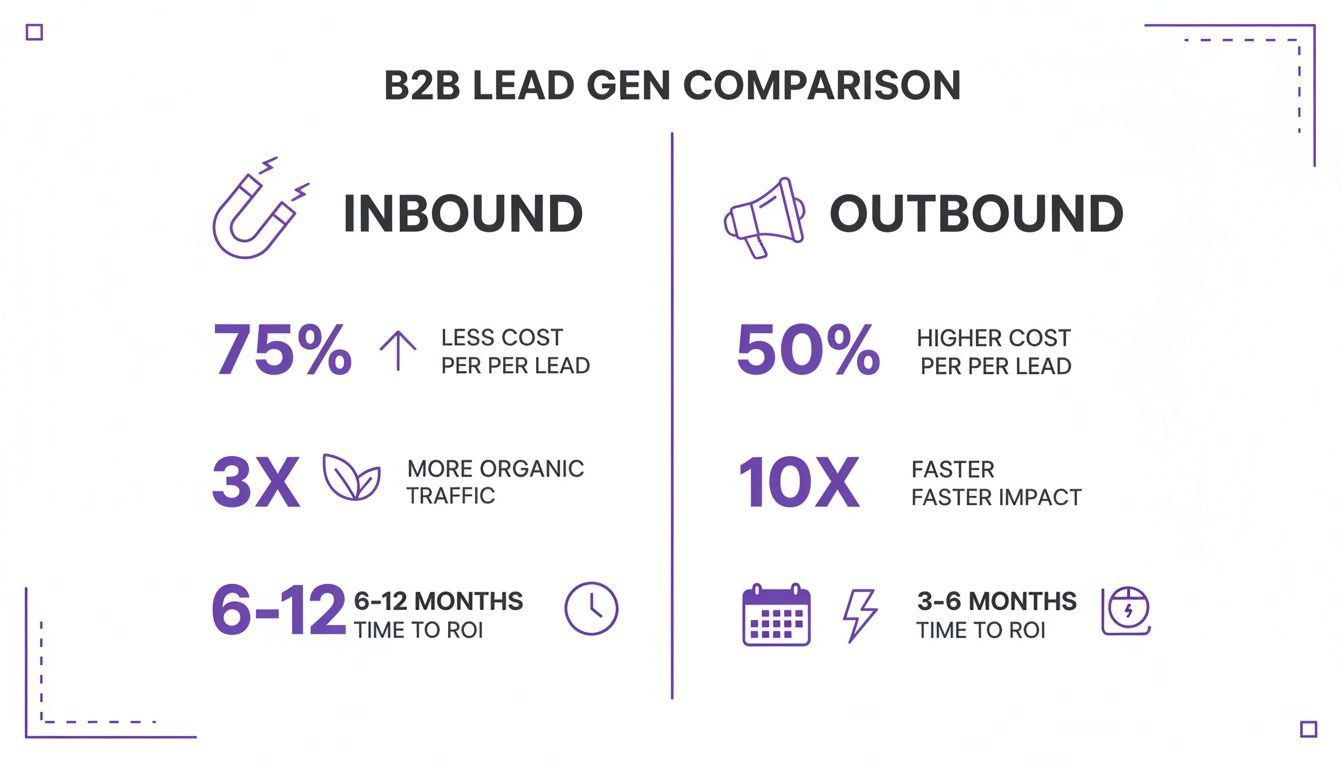
The data makes it pretty clear: while outbound can drum up immediate interest, inbound strategies are built for the long haul, creating cost-effective assets that convert way more efficiently.
Cost Per Lead (CPL) Unpacked
Cost Per Lead (CPL) is a go-to metric, but it acts very differently depending on your strategy. With outbound, CPL is often straightforward to calculate. You spend a certain amount on ads or a sales dialer, and you get a specific number of leads back. Simple. But that cost never goes away. The moment you stop paying, the leads dry up.
Inbound CPL is a different beast entirely—it’s an investment that compounds. You put in the upfront work to create a great blog post or webinar, and that single piece of content can keep pulling in leads for months, sometimes years. This continuously drives down its effective CPL over time, which is exactly why inbound is famous for being more cost-effective in the long run.
Over time, inbound becomes a self-sustaining asset. The content you create today acts like an annuity, paying out qualified leads long after the initial investment is made, which dramatically lowers the long-term acquisition cost.
Lead Quality and Conversion Rates
This is where you'll see the most dramatic difference between the two approaches. Inbound leads are inherently warmer because they found you. They were actively looking for a solution, which means they show up with a much higher level of intent and product awareness. You don't have to convince them they have a problem.
That pre-qualification has a massive impact on your sales team. When it’s time to close deals, inbound leads consistently outperform their outbound counterparts. SEO-driven inbound leads close at a whopping 14.6%, compared to just 1.7% for outbound leads. That's an 8.5x advantage that completely reshapes your customer acquisition math.
Outbound leads, on the other hand, are "cold." They require a lot more heavy lifting from sales to nurture, educate, and build trust. A well-targeted outbound campaign can absolutely land you in front of your ideal customers, but the lack of initial intent means conversion rates are naturally lower and sales cycles are often longer.
Measuring Time to Impact and ROI
Another critical factor is how long it takes to see a return on your investment (ROI). This is where outbound often shines.
Outbound Time to Impact: You can see results almost immediately. A sharp cold email campaign can book meetings within days, and a targeted ad campaign can generate leads within hours of going live. This speed is perfect for businesses that need to validate a new market or hit short-term revenue goals—fast.
Inbound Time to Impact: This is a long game. It can easily take 6-12 months for SEO efforts to gain real traction and for your content library to build enough authority to deliver a consistent flow of organic leads. The eventual ROI is often much higher and far more sustainable, but it demands patience.
Ultimately, which strategy makes more financial sense depends on your company's cash flow, growth targets, and how long your sales cycle is.
Inbound vs Outbound Key Performance Indicators at a Glance
To make this even clearer, let's put the most important metrics side-by-side. This table breaks down what you can typically expect from each strategy when it comes to costs, close rates, and overall impact.
| Metric | Inbound Lead Generation | Outbound Lead Generation |
|---|---|---|
| Cost Per Lead (CPL) | Higher upfront, decreases over time | Lower upfront, but consistent and ongoing |
| Lead Quality | High (warm/hot leads) | Lower (cold/lukewarm leads) |
| Close Rate | ~14.6% (for SEO leads) | ~1.7% |
| Time to Impact | 6-12 months (long-term) | Immediate (days or weeks) |
| Sales Cycle Length | Generally shorter | Generally longer |
| ROI | Compounding and sustainable long-term | Predictable and linear short-term |
Seeing the numbers laid out like this really highlights the trade-offs. Outbound offers speed and predictability, while inbound delivers higher-quality leads and a more sustainable, cost-effective engine for growth down the road.
To get the most out of your budget, especially with outbound, it's vital to have a solid grasp of all the costs involved. If you're building a data-driven sales motion, you might find our guide on creating a pricing model for your lead data business helpful for framing your cost-benefit analysis.
An In-Depth Look at Channels and Tactics
The philosophies behind inbound and outbound lead generation really come to life when you look at the specific channels and tactics involved. Each approach uses a distinct toolkit to either pull prospects in or push a message out, and knowing how to use these tools is the key to building a strategy that actually works.
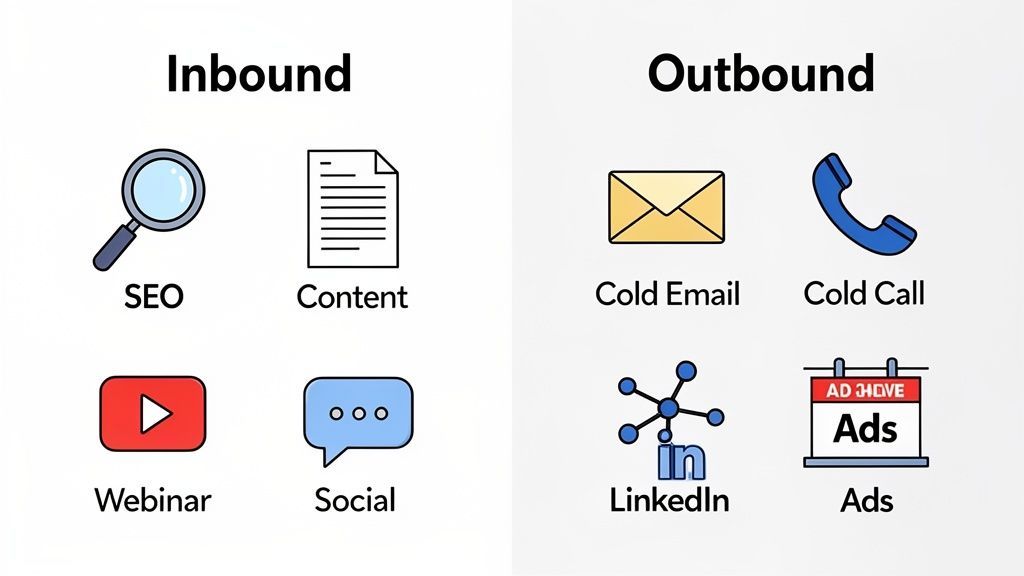
This fundamental difference in approach directly shapes which channels you’ll focus on and what your marketing and sales teams will be doing day-to-day.
Dominant Inbound Channels: The Art of Attraction
Inbound marketing is all about providing value first to earn attention later. The big idea is to become such a trusted resource that prospects actively come looking for you when they have a problem.
This strategy is fueled by creating assets that naturally draw people in. The main channels here are:
- Content Marketing & SEO: This is the absolute bedrock of inbound. By creating genuinely helpful blog posts, whitepapers, and guides that are optimized for search engines, you’re putting answers right where your ideal customers are already looking. In fact, 27% of marketers say organic search brings in the majority of their leads, blowing paid channels (just 11%) out of the water.
- Webinars & Virtual Events: Hosting an educational webinar is a fantastic way to position your company as a thought leader. It pulls in an audience that’s already interested in the problems you solve, giving you a pipeline full of warm, engaged leads.
- Social Media Engagement: Platforms like LinkedIn are perfect for sharing valuable insights, jumping into industry conversations, and building a real community. The focus isn't on the hard sell; it’s about establishing credibility and nurturing relationships over the long haul. For more on this, check out our guide on social media lead generation.
These channels all feed into each other, creating a powerful flywheel effect. A great blog post can be shared on social media, which then drives sign-ups for a deep-dive webinar, nurturing a prospect at every turn.
The core of inbound is permission-based marketing. You're not interrupting prospects; you're creating valuable destinations they choose to visit, making the subsequent sales conversation feel natural and welcome.
Key Outbound Tactics: The Science of Initiation
Outbound lead generation, on the other hand, is about precision and control. You figure out exactly who your ideal customer is, and then you proactively reach out instead of waiting for them to stumble upon you.
For this direct approach to work, you need razor-sharp messaging and highly targeted lists. The most common outbound tactics include:
- Strategic Cold Email: This isn't spam—not when it's done right. A successful cold email campaign involves serious research, a hyper-personalized message that hits on a specific pain point, and a clear call to action.
- Targeted Ads: Using platforms like LinkedIn or Google Ads, you can put your message directly in front of decision-makers based on their job title, industry, company size, and online behavior. This ensures your budget is spent reaching only the most relevant people.
- LinkedIn Outreach: This goes way beyond just sending connection requests. Modern LinkedIn outreach is about engaging with a prospect's content, sending personalized messages that add value, and building a rapport before you ever ask for a meeting.
To get a fuller picture of all the ways you can acquire business leads, take a look at these proven B2B lead generation strategies.
Bridging the Gap: A Real-World Scenario
Here's a secret the best teams know: the most powerful strategies often blend both inbound and outbound. An inbound signal can be the perfect trigger for a killer outbound campaign.
Imagine a prospect from a target company downloads one of your whitepapers. That’s a crystal-clear inbound signal of interest. But if you just wait for them to book a demo, it could take weeks—or it might never happen at all. This is where you can proactively step in.
Instead of waiting, your sales team can use this signal to kick off a targeted outbound play. Here’s what that looks like:
- Identify the Signal: Your marketing automation system flags that someone from "Acme Corp" just downloaded your "2025 Industry Report."
- Gather Intelligence: A sales development rep (SDR) heads over to the Acme Corp website, checking out their "About Us" or "Team" page.
- Accelerate Data Collection: Manually copying and pasting contact info is a massive time sink and prone to errors. Using a no-code tool like ProfileSpider, the SDR can click a single button to instantly extract the profiles of the entire leadership team—names, titles, social links—into a clean, structured list.
- Personalize the Outreach: Now the SDR has a complete list of the key decision-makers. They can draft a personalized email to the VP of Marketing at Acme Corp, referencing the whitepaper their colleague downloaded and offering some additional, tailored insights.
This hybrid approach turns passive inbound interest into an active, high-value outbound conversation. It combines the scalability of inbound with the precision of outbound, creating a lead generation engine that's far more powerful than either strategy could be on its own.
Choosing the Right Strategy for Your Business Stage
The whole B2B inbound vs outbound lead generation debate isn't about finding a universal winner. It’s about picking the right tool for the job. Your company's maturity, industry, sales cycle, and financial realities will dictate which approach makes the most sense right now.
Getting this choice wrong can burn through your budget with nothing to show for it. We've seen startups waste precious cash on slow-burn SEO strategies when they needed immediate revenue, just as we’ve seen established players miss out on scalable growth because they were stuck on cold outreach.
Early-Stage Startups and Market Entry
For a company just starting out, everything boils down to speed, validation, and landing those first crucial customers. You have to test your messaging, figure out what really resonates with your audience, and get cash in the door to prove the model works. This is where a sharp, targeted outbound strategy usually shines.
Outbound lets you hand-pick your ideal first ten customers and start conversations immediately. You simply don’t have the luxury of waiting six months for content to start ranking on Google; you need meetings on the calendar for next week.
A focused outbound motion puts you in direct control of who you’re talking to, giving you raw, unfiltered market feedback. This early intelligence is gold—it helps you refine your product and go-to-market strategy long before you sink serious money into broader campaigns.
Growth-Stage Companies and Scaling
Once you’ve hit product-market fit and have a reliable revenue stream, the game changes. The focus shifts from just getting traction to building a predictable, scalable growth engine. This is the exact moment when investing heavily in an inbound machine starts to make a whole lot of sense.
Building out a solid inbound foundation with SEO, content marketing, and webinars creates a long-term asset that works for you around the clock. This approach is famous for its cost-effectiveness. In fact, research shows that inbound leads cost 61% less on average than outbound leads. That’s a massive saving that stretches your marketing budget significantly further. You can dig deeper into how lead generation costs compare between strategies for more context.
That efficiency, combined with the higher conversion rates you get from warmer leads, creates the powerful, scalable growth engine that propels a company from a contender to a market leader.
For a business in its growth phase, outbound gets you to the next quarter, but inbound gets you to the next five years. The shift toward inbound is a strategic move from short-term wins to long-term, compounding value.
Established Enterprises and Market Leaders
For the big players, the goals are different: market expansion, brand dominance, and defending their turf. These companies usually have the brand recognition and deep pockets to run sophisticated, multi-channel campaigns. At this level, a hybrid model isn't just an option—it's a necessity.
Enterprises can use their established brand authority to fuel a monster inbound machine, pulling in thousands of leads through comprehensive content hubs and high-authority websites. At the same time, they can deploy highly specialized outbound teams to hit strategic targets:
- Targeting Enterprise Accounts: Using Account-Based Marketing (ABM) to go after specific high-value contracts.
- Entering New Verticals: Launching precise outbound campaigns to test and break into new markets quickly.
- Launching New Products: Pushing new offerings directly to a warm, existing customer base or a hand-picked new segment.
By blending the two, enterprises create an incredibly resilient lead generation system. The wide net of inbound builds a massive top-of-funnel pipeline, while surgical outbound strikes ensure key strategic accounts are engaged directly, giving them the best of both scale and precision.
How to Build a Powerful Hybrid Lead Generation Engine
The real conversation isn't about B2B inbound vs outbound lead generation; it’s about how they can work together. The smartest companies don't pick a side. They build a unified system where inbound and outbound strategies feed and amplify each other, creating a growth flywheel that just keeps spinning.
This hybrid approach gets you past the limits of a single strategy. You're combining the long-term, scalable authority you build with inbound with the immediate, targeted precision of outbound. The result is a more resilient, efficient, and adaptable lead generation machine.
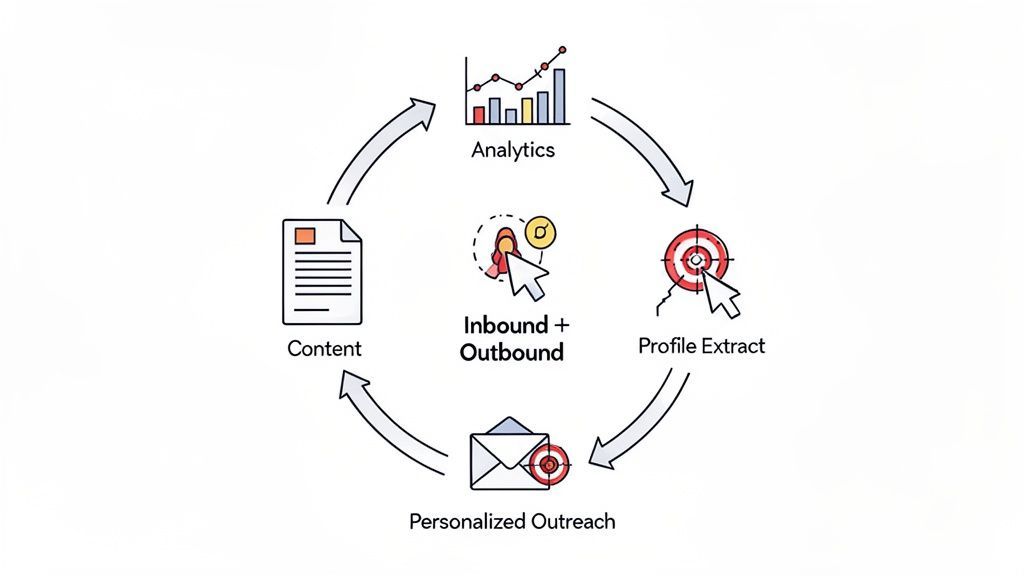
Creating a Two-Way Street for Leads
A true hybrid model isn't just about running inbound and outbound campaigns at the same time. The magic is in creating intentional feedback loops where one strategy’s output becomes the other’s input. This creates a self-reinforcing cycle that consistently improves lead quality and conversion rates.
Think of it like this: inbound marketing attracts and qualifies prospects, warming them up, while outbound marketing actively engages the highest-value targets you uncover from those inbound signals.
Here are the two main ways this synergy plays out:
- Using Inbound Content to Fuel Outbound Outreach: High-value inbound assets like research reports, webinars, or detailed case studies are the perfect excuse to start an outbound conversation. Instead of a generic "just checking in" email, your outreach becomes hyper-relevant: "I saw your team downloaded our report on AI in recruiting; I thought you might find this related case study useful."
- Using Inbound Analytics to Target Outbound Efforts: Your website analytics are a goldmine for outbound opportunities. When you see multiple people from the same company hitting your pricing page or digging into specific product features, that’s a massive buying signal. This is your cue to launch a targeted outbound sequence to the decision-makers at that company.
This interconnected approach ensures you never miss a beat, turning passive interest into an active, productive conversation.
The Hybrid Workflow: Turning Interest into Opportunity
Let’s walk through a practical, step-by-step example of how this hybrid engine works in the real world. This workflow shows how to turn a simple inbound signal into a high-value, personalized sales conversation.
Step 1: Identify the Inbound Signal
It all starts in your marketing automation platform. It flags a significant inbound activity—for instance, three different employees from "Global Tech Inc." have visited your solutions page in the past week, and one of them downloaded a whitepaper.
This isn't just a random visitor. It's a clear signal of organizational interest.
Step 2: Gather Actionable Intelligence
Your Sales Development Representative (SDR) gets this alert. Instead of just reaching out to the one person who downloaded the paper, they aim for a multi-threaded approach to engage the entire decision-making unit. Their first stop is Global Tech Inc.'s company website, specifically their "Team" or "Leadership" page. This is where they can spot the key players—the VP of Sales, the Head of Operations, and the CRO.
A single inbound lead is an entry point, not the destination. The goal of a hybrid strategy is to leverage that initial interest to map out and engage the entire buying committee within a target account.
Step 3: Accelerate Data Extraction with One-Click Automation
Manually copying and pasting names, titles, and social profiles from a company website is slow, tedious, and a recipe for errors. This is where a modern, no-code tool becomes a game-changer for sales and marketing teams.
With an AI-powered scraper like ProfileSpider, the SDR can turn this manual chore into a one-click action. By simply opening the extension on the company's team page and clicking "Extract Profiles," they can instantly capture the structured data of every decision-maker listed.
In seconds, they have a clean list with names, job titles, and social links, ready for outreach. This is a prime example of how to automate lead generation workflows for maximum efficiency. To explore more powerful automation tactics, check out our guide on 7 lead generation automation workflows that actually convert.
This step is critical because it bridges the gap between identifying an interested company and having the actionable data needed to engage them effectively.
Step 4: Execute Personalized Outbound Outreach
Now armed with a complete list of key contacts, the SDR can launch a highly personalized and coordinated outbound campaign.
- They can send a tailored email to the VP of Sales, referencing the specific solutions her team was browsing.
- Simultaneously, they can connect with the Head of Operations on LinkedIn, mentioning the whitepaper a colleague downloaded.
This approach transforms a passive, anonymous website visit into a multi-channel, personalized outbound conversation. It’s no longer a cold outreach; it's a warm, context-aware engagement that is far more likely to get a positive response. By combining the scale of inbound marketing with the precision of AI-driven outbound tools, you build a lead generation engine that is truly greater than the sum of its parts.